
A convincing website, polished photographs and a discounted treatment package cannot tell you whether a clinic has identified the right diagnosis or can manage complications. By the end, you will have a practical way to check medical credentials, assess the first consultation, compare treatment plans and judge the full cost and follow-up before booking.
Key takeaways
- Ask which doctor is responsible for your assessment, consent, treatment and follow-up.
- Use the consultation to confirm the diagnosis before agreeing to treatment.
- Request the treatment’s risks, alternatives, recovery time and expected results in writing.
- Compare the full cost, evidence, review schedule and aftercare—not just the package price.
Check who is medically responsible for your care
A medically supervised skin clinic names the doctor responsible for assessment, consent, treatment and follow-up. A salon or medi-spa may advertise medical procedures while leaving you unsure who holds that responsibility; do not proceed until the clinic gives you a clear answer.
- Ask for the treating clinician’s full name, job title and doctor registration details. Verify the registration through your country’s medical-board database.
- Check the clinician’s training against the procedure. Look for dermatology training for acne, rashes, pigmentation and hair loss, or a plastic surgeon qualification for surgical facial enhancement. For laser, injectables or microneedling, ask who will actually perform the procedure.
- Use the relevant specialist register, such as the GMC specialist register in the UK, rather than relying on a clinic’s website or social-media biography.
- Check the clinic regulator and complaint route. In England, provider registration with the Care Quality Commission is separate from a doctor’s professional registration; other countries use different medical and facility regulators.
- Ask who will prescribe, obtain consent, manage complications and provide follow-up if the doctor is absent. A technician or sales consultant should not be the only person assessing you.
A dermatologist-led clinic diagnoses before selling a package. Persistent acne could be folliculitis, changing pigmentation could require assessment, and sudden hair loss or a suspicious mole needs medical review before cosmetic treatment. Removing or lasering a pigmented lesion first can interfere with later diagnosis.
A proper consultation covers your history, medicines, allergies, pregnancy status, previous procedures, examination, alternatives and the option of no treatment.
Use the first consultation to confirm the diagnosis
Before a clinician recommends a peel, laser, medication or injection, they should establish a skin diagnosis before treatment—not sell you a package. A changing mole, unusual pigmented lesion, persistent rash or sudden hair loss needs medical assessment; removing or lasering a suspicious lesion first can make later diagnosis harder.
A useful consultation follows a sequence:
- The clinician asks when the problem began, along with symptoms, triggers, pregnancy status, allergies, current medicines, previous procedures and products used.
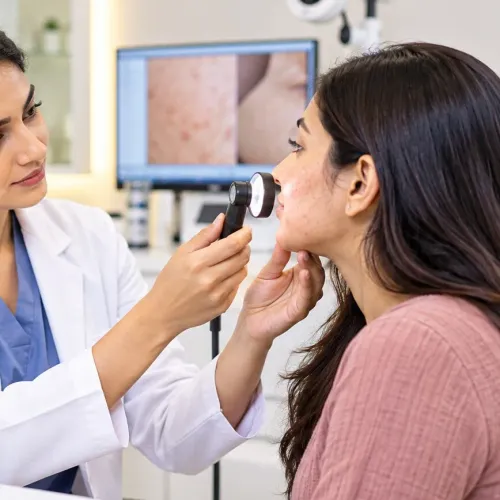
- They examine your skin in person, record relevant findings, and explain the working diagnosis and reasonable alternatives.
- They connect the diagnosis to your goal, discussing expected improvement, material risks, recurrence, non-response and the option of no treatment.
- They provide a written plan covering preparation, the proposed treatment, aftercare and follow-up, with time for you to consider it rather than decide under pressure.
Ask what the clinician is ruling out. Acne or folliculitis can look similar but need different treatment; melasma or post-inflammatory hyperpigmentation can worsen with inappropriate heat or irritation. A rosacea diagnosis matters before using products or procedures that trigger flushing, burning or persistent redness.
If the clinician cannot name the condition, explain uncertainty or examine you before recommending treatment, pause. For laser or light treatment, ask how your skin colour, tanning history, wavelength, settings, sun avoidance and test-spot policy affect the risk of burns and post-inflammatory hyperpigmentation.
Judge whether the proposed treatment fits your condition
Choose treatment by matching the diagnosis, depth of the problem, pigment risk and acceptable recovery time—not by choosing the most advanced-sounding procedure. A sound skin treatment plan explains why each option fits, what it cannot fix, and when no procedure is safer.
| Option | Best fit | Main trade-off |
|---|---|---|
| Topical medication | Acne, rosacea, melasma or inflammation needing medical control | Requires consistent use; improvement takes time and the wrong drug can worsen irritation or pigmentation |
| Superficial chemical peel | Surface dullness, mild acne or uneven tone | Less downtime than deeper peels, but results are limited; a chemical peel consultation should identify peel depth and pigment risk |
| Medium or deep peel | Selected scars, sun damage or deeper texture problems | Longer recovery and higher risk of burns, scarring and pigment change, especially in darker skin |
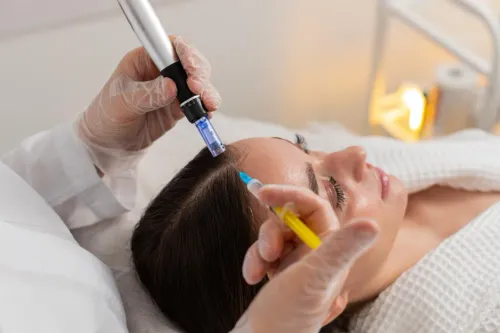
| Microneedling | Selected textural scars or fine lines after healing active inflammation | Results depend on microneedling suitability, sterile technique and repeated sessions |
| Subcision | Tethered rolling acne scars that pull the skin downward | It does not treat colour change or every scar type; bruising and swelling are expected |
| Laser | Specific pigment, vascular or texture concerns | Wavelength, settings and tanning history affect burns and post-inflammatory hyperpigmentation; ask about laser treatment for darker skin and test spots |
| No procedure | Mild, stable or uncertain conditions, or when risk outweighs benefit | You may need observation, medication or reassessment instead |
Ask for alternatives, downtime, maintenance and complication management in writing. Do not consent during a sales push; take time to compare the plan with doing nothing.
Ask specific safety questions before you consent
Ask for clear answers before you sign consent. The clinic should identify the product, device, practitioner, hygiene process and emergency plan in writing, not rely on a sales assistant’s explanation.
1. What exact product is proposed, and what is its intended use? Check the manufacturer, batch or lot number, expiry date and whether it is a sealed and traceable product. For filler, ask about dermal filler complications, including vascular blockage, infection and delayed swelling.
2. Which device and settings will be used? Ask for the model, wavelength or energy level, operator’s training and a laser safety test spot policy. If you have darker or recently tanned skin, ask how the settings and sun-avoidance plan reduce burns and post-inflammatory hyperpigmentation.
3. Who will perform the treatment? Confirm the person’s name, professional qualification, registration and experience with your skin type and procedure. Ask who remains responsible if an external contractor performs it.
4. How is infection control handled? Good infection control at skin clinics includes hand hygiene, skin antisepsis, sterile single-use needles and unopened disposable cartridges. Ask how treatment rooms, reusable instruments and sharps are managed.
5. What happens if something goes wrong? Obtain written aftercare covering recovery, restrictions, warning signs, alternatives and poor results. Confirm the emergency contact, access to urgent medical assessment and who provides follow-up if the practitioner leaves or the clinic closes. For filler, ask whether appropriate rescue treatment is immediately available.
Compare the complete cost, evidence and follow-up
Compare quotes only after you map the entire treatment pathway. A skin clinic price comparison should include consultation, clinician fee, product or device, anaesthesia, prescribed aftercare, review appointments, maintenance sessions and treatment for complications. An introductory price is not comparable with a package that includes correction or follow-up.
| Clinic | Evidence to request | Follow-up to confirm |
|---|---|---|
| Clinic A | Published evidence for the proposed treatment and clear limits | Named clinician, review dates and complication contact |
| Clinic B | Before-and-after images with matching lighting, pose, distance, treatment interval and session count | Written aftercare and a plan if results are poor |
| Clinic C | Explanation of non-response, recurrence and ongoing maintenance | Cover if the practitioner leaves or the clinic closes |
Treat photographs as examples, not promises. Ask for written informed consent covering recovery time, restrictions, warning signs, alternatives and what happens if the outcome is unsatisfactory. For injections or procedures with delayed complications, confirm who is legally responsible for assessment, prescribing, treatment and follow-up.
Check the clinic’s regulator and medical regulator complaint route, not only online reviews. Registration of the clinic and registration of the individual professional are separate checks in England, where you can search the Care Quality Commission and the practitioner’s professional register.
Finesse Aesthetic should be assessed by the same standards: compare its written plan, evidence and aftercare and follow-up with competing clinics, not its promotional price. Ask who answers urgent calls about severe pain, blanching, rapidly increasing swelling, fever or visual symptoms.
Frequently asked questions
Who should be medically responsible for my skin treatment?
The clinic should identify the doctor responsible for your assessment, informed consent, treatment and follow-up. Do not proceed if it cannot give you a clear name and role.
What should happen during a first skin-clinic consultation?
Use the consultation to explain your concerns, review your medical history and confirm the diagnosis before discussing or accepting treatment.
How can I tell whether a proposed treatment fits my skin condition?
Ask what condition the treatment addresses, why it suits your diagnosis, what alternatives exist, how many sessions you may need and what results to expect.
What should I ask about safety before consenting?
Ask about side effects, contraindications, practitioner qualifications, the product or device used, emergency support, recovery time and follow-up arrangements.
What should I compare between skin clinics?
Compare the complete cost, supporting evidence, treatment plan, review schedule, aftercare and who will manage complications—not only the advertised package price.