A minor spot, brief rash or occasional breakout does not always require a specialist, but certain changes need prompt medical assessment. You will be able to sort emergency symptoms from routine concerns, recognise useful time thresholds and prepare for a consultation that leads to the right diagnosis before treatment.
Key takeaways
- Seek emergency care for breathing trouble, throat swelling, or rapidly worsening blistering rash.
- Try self-care only for mild symptoms that improve within one to two weeks.
- Arrange examination for changing moles, persistent rashes, new pigmentation, or sudden hair loss.
- Consult a dermatologist before peels, lasers, or scar treatments to assess risks and alternatives.
Which skin symptoms need emergency or same-day care?
Breathing difficulty, wheezing, or swelling of the lips, tongue or throat with a rash requires emergency services. Do not wait for a dermatologist. Facial swelling and rash, eye-area swelling, eye involvement, extensive burns, painful blistering rashes, sudden severe allergic reactions, or rapidly worsening systemic illness also need urgent emergency assessment.
A rapidly spreading rash or area that is hot, painful, swollen or tender can signal cellulitis or another serious infection. Treat these skin infection warning signs as same-day problems, especially with fever, chills, red streaks, pus, blistering, confusion or feeling very unwell.
Facial infections and infections near the eye deserve same-day medical care because swelling and infection can threaten vision or spread quickly.
| Situation | What to do | Why it matters |
|---|---|---|
| Emergency symptoms | Use emergency services now | Breathing problems, throat swelling, eye involvement, extensive burns or severe systemic illness can worsen rapidly |
| Serious infection features | Seek a same-day dermatologist, urgent-care clinic or doctor | A rapidly spreading rash, fever, red streaks, blistering or severe pain may require antibiotics or hospital treatment |
| Prompt dermatology review | Book a dermatologist soon | A new or changing mole, sore that does not heal, sudden patchy hair loss or severe pain without emergency features should not be monitored indefinitely |
| Routine appointment | Arrange review if symptoms persist or recur | A persistent rash, repeated hives or unexplained skin change needs diagnosis rather than repeated home treatment |
When is self-care reasonable, and when has a problem lasted too long?
A mild irritation or uncomplicated breakout is reasonable to manage with gentle cleansing, moisturiser and advice from a pharmacist or primary-care clinician. Stop the suspected irritant and seek review if it worsens, spreads or keeps returning.
Use these thresholds to decide when to see a skin specialist:
1. Give consistent over-the-counter acne treatment 8 to 12 weeks. Book a dermatologist sooner for deep painful nodules, cysts, scarring, dark marks or significant distress. The acne treatment time threshold matters because waiting can increase permanent scarring.
2. Arrange an assessment for a rash lasting more than 2 weeks, and definitely by 3 weeks if it has not settled with appropriate care. Oozing, yellow crusts, pus, fever, worsening pain or sleep disruption moves it out of self-care and needs prompt medical attention.
3. Seek specialist review for recurrent hives lasting 6 weeks or longer, persistent rosacea, uncontrolled psoriasis, or psoriasis affecting the scalp, nails, genitals, palms or soles. New joint pain, stiffness or swelling with psoriasis needs prompt assessment.
4. Book a consultation for sudden patchy hair loss or symptoms that repeatedly return, even if each episode improves.
Do not use leftover antibiotics, steroid combinations, bleaching creams, harsh scrubs or unprescribed retinoids. They can mask the diagnosis, promote antibiotic resistance or worsen pigmentation; steroid cream side effects include skin thinning, stretch marks, visible blood vessels, acne and rosacea. Isotretinoin requires qualified prescribing and monitoring and must not be used during pregnancy.
Which changes in a mole, rash, pigmentation or hair need examination?
A changing mole needs examination before cosmetic treatment. Use the ABCDE mole check: asymmetry, an irregular border, multiple colours, a diameter commonly above 6 mm, and evolution in size, shape or colour. Other changing mole warning signs include an ugly-duckling appearance, bleeding, crusting, persistent itching or failure to heal.
These features do not diagnose melanoma, but they justify prompt dermatology review.
| Look-alike | Why appearance misleads | What examination may clarify |
|---|---|---|
| Acne versus folliculitis | Both cause red bumps or pustules | Follicle distribution, shaving or sweat triggers, and testing can separate bacterial or fungal folliculitis from acne |
| Eczema versus fungal infection | Both can itch, scale and redden | A skin scraping can identify fungus; steroid cream alone can spread or mask it |
| Melasma versus other pigmentation disorders | Brown facial patches have several causes | Pattern, medicines, hormones and examination guide the diagnosis |
| Allergic reaction versus infection | Redness and swelling can occur in both | Fever, warmth, pain, pus, exposure history and progression change the urgency |
Seek assessment for sudden patchy hair loss, broken hairs, scalp pain or inflammation, eyebrow or eyelash loss, or shiny scar-like scalp areas. Scarring alopecia can permanently destroy follicles, so cosmetic products are not a safe substitute for diagnosis.
Persistent facial redness or rosacea with gritty, painful, light-sensitive or persistently red eyes needs medical attention. Report new joint pain, stiffness or swelling with psoriasis because it can signal psoriatic arthritis.
What happens during a dermatologist consultation, and how should you prepare?
The dermatologist consultation process starts with questions, not treatment. Expect discussion of when the problem began, how it has progressed, possible triggers, itching, pain, exposures, medicines and previous diagnoses. The dermatologist then examines the skin, scalp, nails and, when relevant, mucosal surfaces.
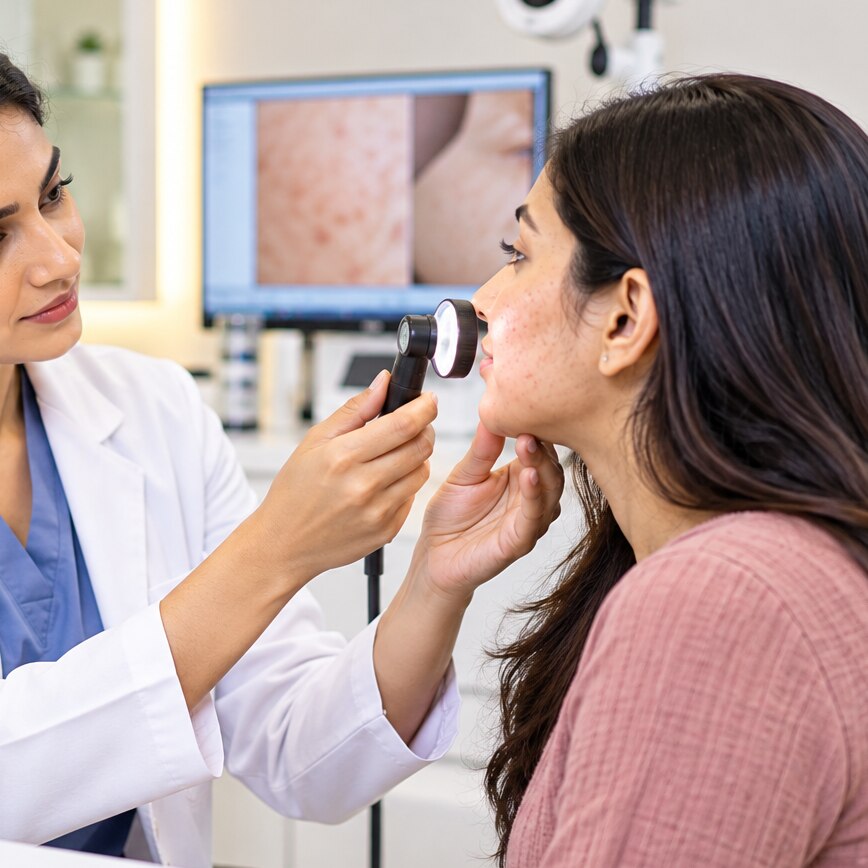
Tests depend on the findings. A dermoscopy examination gives a magnified view of a concerning mole or pigmented lesion. Patch testing investigates contact allergy, while skin scraping can distinguish a fungal infection from eczema. A biopsy may be recommended when skin cancer is suspected; bacterial culture can identify an infection.
Selected hair-loss patterns may justify blood tests, including thyroid and iron evaluation.
Prepare in three steps:
1. Bring clear photographs that show progression, especially if the rash, swelling or hair loss changes between appointments. Photograph the area in consistent lighting and include one wider image for location.
2. Write down every product and medicine used on the area, including retinoids, exfoliating acids, steroid creams, hair products and supplements. Add your allergy history, previous diagnoses, and the dates and results of earlier treatments.
3. Keep using treatments unless the clinic gives different instructions. Do not stop retinoids, exfoliating acids or steroid creams, and do not schedule or perform a procedure before asking whether it affects the examination. Correct preparation depends on the suspected condition; stopping a medicine can alter the appearance and obscure the diagnosis.
Should you see a dermatologist before choosing a peel, laser or scar procedure?
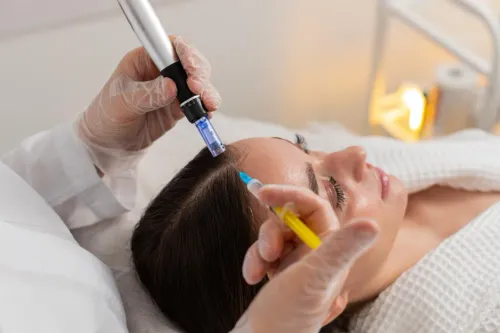
Book a dermatologist before laser treatment, a medium or deep chemical peel, microneedling, scar procedure or filler if you have active infection, inflammatory disease or an undiagnosed lesion. Treatment also changes with your skin type, cold-sore history, poor scarring, abnormal pigmentation, photosensitising medicines or blood thinners. This is the foundation of chemical peel safety.
Medical versus cosmetic consultation
| Consultation | Main purpose | What you should receive |
|---|---|---|
| Medical | Investigate disease and protect long-term skin health | Diagnosis, alternatives, contraindications and a treatment plan |
| Cosmetic | Address pigmentation, scars, pores or rejuvenation | Procedure options, expected result, downtime and cost |
| Filler assessment | Plan a medical-device injection | Named injector, product and emergency complication plan |
Fillers are medical devices, not risk-free beauty products. Infection, nodules, vascular occlusion, skin necrosis, stroke and blindness are recognised risks, so the injector’s registration, product name and response plan must be identifiable.
Compare providers using this checklist:
- Registration and experience with your specific condition and skin type
- Access to dermoscopy, patch testing and appropriate medical investigations
- Alternatives, risks, contraindications and evidence that treatment is medically indicated rather than selected from a menu
- Follow-up arrangements, including who manages infection, burns, pigment changes or filler complications
At Finesse Aesthetic, a Chennai option for skin procedures, apply this same checklist. Chennai dermatologist skin care planning also needs to account for heat, humidity, sweating, dust and daily sunscreen use, which affect triggers, product choices, sun protection and appointment timing.
Prescriptions can take weeks or months; procedures may need several sessions and downtime, and follow-up can change after your skin responds.
Frequently asked questions
Which skin symptoms need emergency or same-day care?
Call emergency services for breathing difficulty, wheezing, or swelling of the lips, tongue, or throat with a rash. Seek urgent assessment for facial swelling, eye involvement, extensive burns, painful blistering rashes, sudden severe allergic reactions, or rapidly worsening systemic illness.
When is self-care reasonable for a skin problem?
Self-care is reasonable for mild, localised symptoms when you feel well and the problem is improving. Arrange a dermatology appointment if it persists beyond one to two weeks, keeps returning, spreads, becomes painful, or fails to respond to sensible care.
Which changes in a mole, rash, pigmentation, or hair need examination?
Have a mole examined if it changes in size, shape, colour, border, or surface, or starts bleeding. Book an assessment for a persistent or changing rash, new or spreading pigmentation, a non-healing sore, or sudden patchy hair loss.
What happens during a dermatologist consultation?
The dermatologist reviews your history, examines the skin, scalp, hair, or nails, and asks about medicines, allergies, exposures, and previous treatments. Prepare a symptom timeline, product list, medical history, photographs showing progression, and details of triggers.
Should you see a dermatologist before choosing a peel, laser, or scar procedure?
Yes. An examination can identify active acne, infection, eczema, melasma, keloid risk, medication interactions, or a diagnosis that changes the treatment choice. Ask about expected results, downtime, side effects, alternatives, operator qualifications, and aftercare before booking.