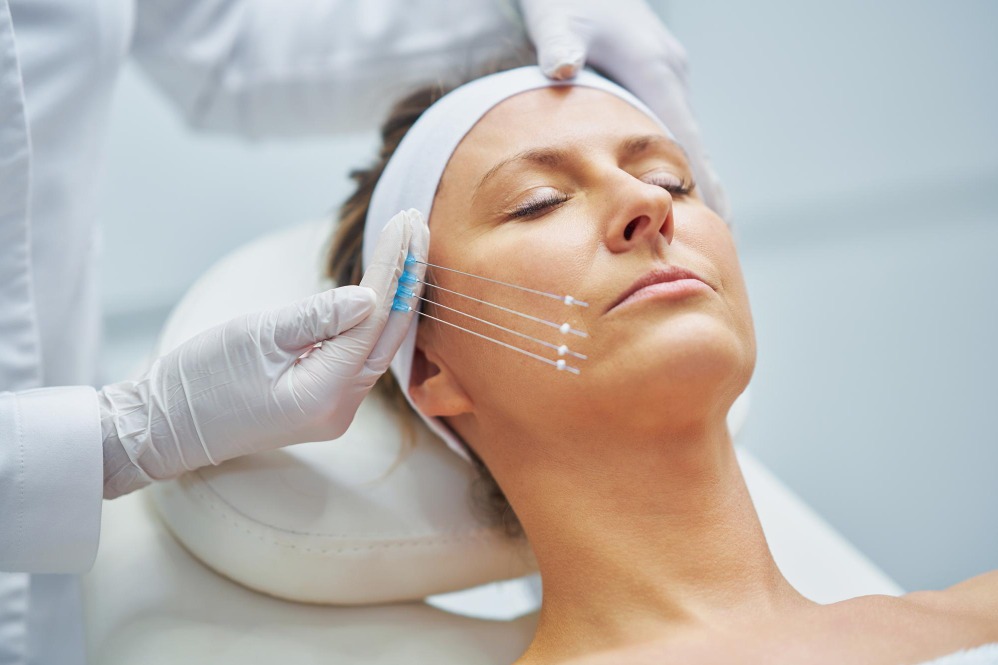
A Threadlift is often considered by people who want facial rejuvenation but are not ready for conventional facelift surgery. The procedure uses specially designed threads placed beneath the skin to create a lifting effect in selected areas and may also stimulate a tissue response around the threads.
It can be useful in appropriately selected patients, but the word 'lift' sometimes creates expectations that are closer to surgery than a minimally invasive procedure can realistically provide.
What Can a Threadlift Address?
Threadlifting is generally discussed for selected facial-laxity concerns.
Depending on facial anatomy and individual suitability, treatment may focus on areas such as the cheeks, jawline or lower face.
The best candidates are not determined by age alone. The degree of laxity, skin quality, facial structure and desired amount of correction all matter.
When Might It Not Be Enough?
A person with substantial loose skin or significant tissue descent may expect a degree of lifting that threads cannot provide.
In such circumstances, discussing facial plastic surgery may provide a more realistic comparison.
This does not mean every person with ageing changes needs surgery. It means the procedure should match the scale of the problem.
Understand That Facial Ageing Is Multifactorial
Loose skin is only one component of ageing.
A face can also change because of:
- Volume loss
- Bone and structural changes
- Changes in facial fat
- Skin thinning
- Fine lines
- Pigmentation
- Reduced skin elasticity
A threadlift cannot address all these factors simultaneously.
Some patients may benefit more from a different procedure, while others may eventually use a combination approach.
Ask About the Threads and Technique
Before proceeding, ask the clinician to explain the treatment plan in understandable language.
Useful questions include:
- Which facial areas will be treated?
- What type of improvement is expected?
- What temporary swelling, bruising or discomfort may occur?
- What activities should be avoided during recovery?
- How long is the effect expected to last?
- What complications are possible?
- What happens if the result is asymmetrical or another problem develops?
A discussion of potential complications is part of informed consent, not a sign that the treatment is inherently unsuitable.
Do Not Schedule Too Close to an Important Event
Even minimally invasive procedures can produce temporary visible effects.
People planning treatment in Chennai before weddings, professional events, photographs or travel should discuss recovery time with their clinician rather than assuming they will look completely normal the following day.
Choose Based on Assessment, Not Age
Finesse Aesthetic offers aesthetic and cosmetic treatment consultations in Chennai for patients considering facial rejuvenation.
The most important readiness indicator for a Threadlift is not simply wanting a younger appearance. Suitable candidates should understand the degree of correction the procedure can reasonably provide, accept its limitations and have their facial anatomy assessed properly.
For larger structural changes, surgical options may deserve consideration. For milder concerns, minimally invasive treatments may be sufficient. A thoughtful consultation should help distinguish between these situations before a treatment decision is made.
Keywords