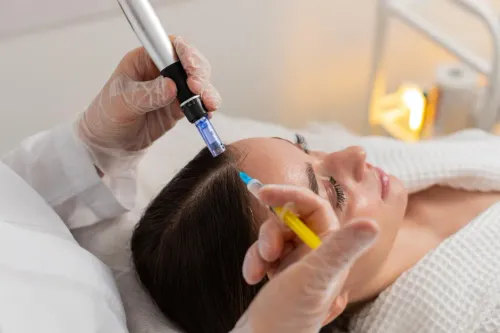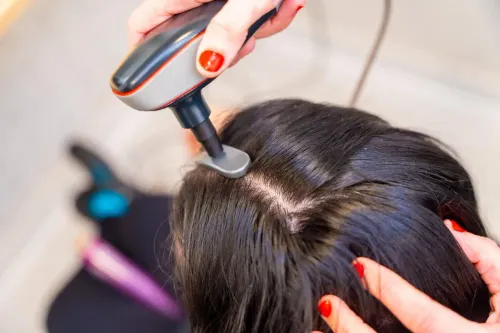
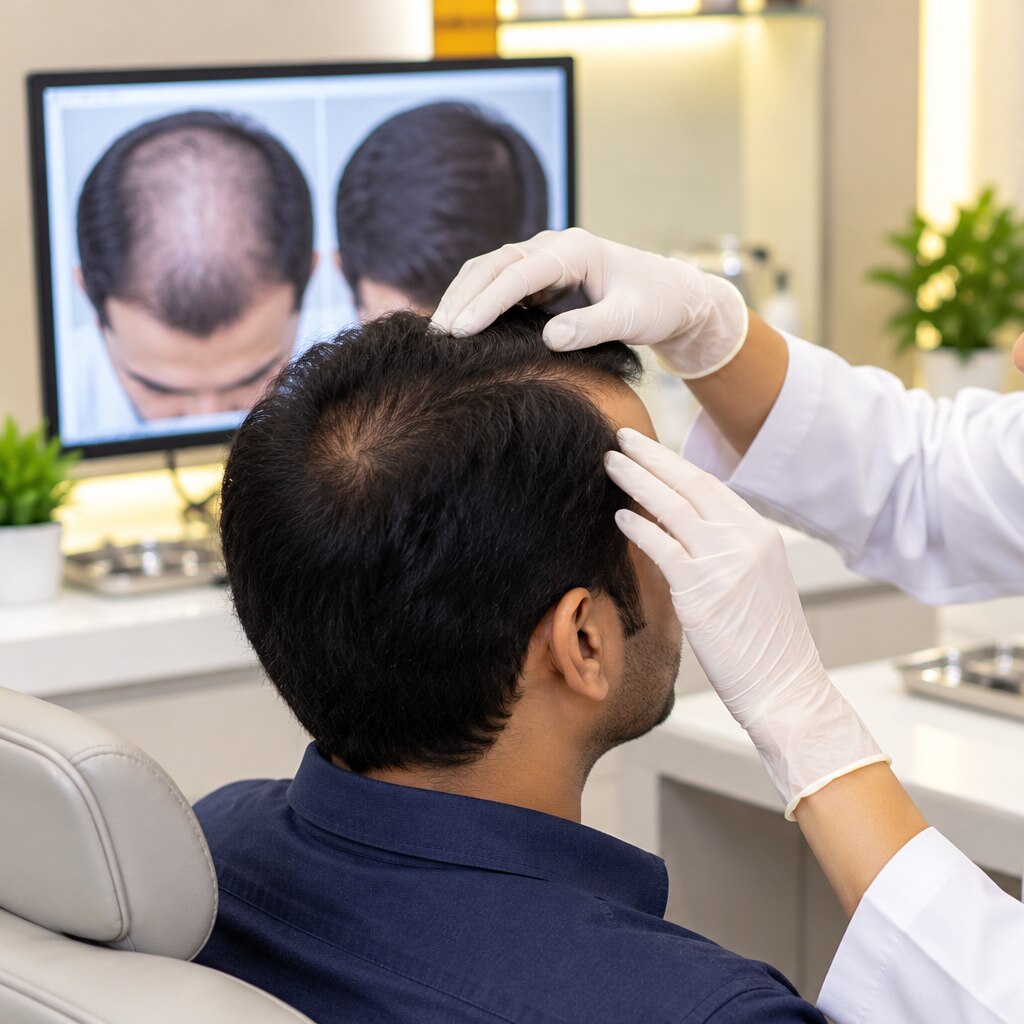
A transplant can restore coverage without looking obvious, but the result depends on diagnosis, donor management and the design of each follicular unit—not simply the number of grafts placed. By the end, you will know how to assess candidacy, compare FUE with FUT, judge a clinic’s plan and prepare for the recovery timeline and limits.
Key takeaways
- Choose an age-appropriate, slightly irregular hairline over a ruler-straight design.
- Compare FUE and FUT by donor area, scarring, recovery and graft requirements.
- Delay treatment until active hair loss, scalp disease or medical causes are addressed.
- Request a graft estimate, surgeon credentials, follow-up plan and complete cost breakdown.
What makes a hair transplant look natural?
A natural-looking hair transplant depends on hairline design and intelligent use of limited donor follicles, not simply on adding as many grafts as possible. The surgeon should create an age-appropriate, slightly irregular transition zone rather than a ruler-straight edge.
Single-hair follicular units belong at the front; larger units behind them create gradual density without a plug-like appearance.
Follicular-unit direction, angle and spacing must vary naturally across the scalp. Uniformly parallel grafts make hair look planted, while incorrect angles can expose the transplant under bright light or when you style it. Density also needs distribution between the hairline, mid-scalp and crown instead of concentrating everything in one area.
Remember the difference between graft count versus hair count: one graft can contain one to four hairs. A plan quoting 2,000 grafts does not necessarily promise 2,000 hairs, so ask how many hairs the grafts are expected to contain.
- Preserve existing hair by assessing miniaturisation and planning around native follicles; ongoing androgenetic alopecia can thin those hairs after surgery.
- Avoid a hairline placed too low or made too dense, because it can look artificial and consume donor follicles needed for future loss.
- Reserve donor hair for later treatment rather than using the entire supply in one session; transplantation redistributes existing follicles and cannot create new ones.
Hair calibre, curl and donor density also influence the final visual coverage, so the same graft number will not produce the same result for every patient.
How FUE and FUT work from consultation to follow-up
A consultation begins with diagnosing the cause and pattern of loss, examining donor density and scalp health, and drawing an age-appropriate hairline. The surgeon estimates grafts, not hairs: each follicular unit contains one to four hairs.
Curly or tightly curled hair needs particular extraction skill because follicles can curve beneath the skin and increase transection risk.
FUE hair transplant | FUT strip surgery Technique | Individual follicular units are removed with a punch | A scalp strip is removed and dissected into grafts Scarring | Multiple small round scars; aggressive harvesting can widen or lighten them | One linear scar, which can stretch Time and yield | Often takes longer; the usable graft count depends on donor limits | Can provide a larger single-session yield; the strip limits supply Shaving and recovery | Donor-area shaving is often required, though selected cases use limited shaving; recovery is usually distributed across many sites | The strip area may need trimming; incision healing adds tightness and scar care Suitability | Useful when you prefer short hairstyles or need staged harvesting | Useful when a strong donor band and higher session yield justify a linear scar
After local anaesthesia, the team prepares and extracts grafts, keeps them hydrated, makes recipient channels, and completes follicular-unit extraction and implantation. A dressing protects the donor area; written washing and sleeping instructions follow.
- Diagnoses you and designs the hairline.
- Performs extraction, including difficult curly-hair work.
- Makes recipient incisions and places grafts.
FUE is not automatically more natural than FUT strip surgery. Placement, handling and donor preservation decide that. Follow-up checks healing, shedding and growth, with review scheduled as the grafts mature.
Who is a suitable candidate, and when should treatment wait?
A suitable hair transplant candidacy profile includes diagnosed, stable androgenetic alopecia, enough healthy donor follicles and a realistic goal: improved coverage, not teenage density. Transplantation redistributes existing follicles; it creates no new ones, so limited donor supply must cover the hairline, mid-scalp and crown while allowing for future thinning.
| Condition | Candidacy signal | Usual next step |
|---|---|---|
| Androgenetic alopecia | Stable, patterned miniaturisation | Consider transplant planning with medical treatment |
| Alopecia areata | Patchy or unpredictable loss | Diagnose and treat before surgery |
| Scarring alopecia | Smooth areas, inflammation or lost follicle openings | Specialist assessment; transplantation may fail |
| Telogen effluvium | Diffuse shedding after illness, stress or another trigger | Find and correct the cause |
| Active scalp inflammation | Redness, scale, pain, pustules or itching | Control the scalp disease first |
| Unexplained or rapidly progressing loss | Loss does not match a stable pattern | Establish the diagnosis before surgery |
Age alone does not decide eligibility. Your pattern must be stable enough to plan, your donor area must have sufficient density, and you must accept that a low, uniformly dense hairline can waste follicles needed later.
Ask about combination planning. Topical minoxidil can support existing hair, while appropriate men may discuss oral finasteride. That discussion must cover sexual and mood-related adverse effects; finasteride is not a routine option during pregnancy or when pregnancy is possible. Treat the underlying diagnosis before transplanting diseased scalp.
What recovery, growth and risks should you expect?
Expect the transplanted hairs to shed during the first several weeks; this does not mean the grafts have failed. Shock loss can also thin nearby native hair, and miniaturised hairs may not recover if pattern loss remains active.
The hair transplant results timeline is gradual: visible regrowth usually starts around three to four months, an early assessment is useful at six to nine months, and maturation continues for 12 months or longer. Hair transplant recovery includes careful aftercare:
- Review every medicine and supplement with the surgical team, and discuss smoking; nicotine impairs blood flow and healing.
- Wash exactly as instructed, usually with gentle pressure and no scratching or picking at crusts.
- Avoid strenuous exercise until cleared, and protect the scalp from direct sun; do not expose fresh grafts to heat or sunburn.
- Sleep with your head elevated and avoid rubbing the recipient or donor area.
- Plan work downtime around swelling, crusting and visible redness; desk work may resume sooner than physical work.
Seek urgent medical review for uncontrolled bleeding, rapidly increasing pain or swelling, fever, pus, spreading redness, breathing difficulty or sudden vision changes. Hair transplant risks include pain, swelling, bleeding, infection, folliculitis, cysts, altered sensation, persistent numbness, visible or hypopigmented scarring, overharvesting, poor graft growth and unnatural angulation.
Future thinning can expose gaps and require revision, while limited donor hair makes correction harder.
How to compare clinics, plans and total cost
Compare clinics by who performs each surgical step and what is included in the total price, not by the headline quote. This is the core of a useful hair transplant clinic comparison.
Ask these questions before paying a deposit:
- Who diagnoses the loss and designs the hairline? Who performs extraction, makes recipient incisions and implants grafts?
- What are the surgeon credentials? Request the surgeon’s medical registration number and council details, then verify them independently with the National Medical Commission or the relevant state medical council.
- Will you receive a written diagnosis, hairline drawing, estimated graft count and an explanation that grafts are not the same as hairs?
- Does the plan protect the donor area and allocate follicles between the hairline, mid-scalp and crown?
- Which medicines are recommended, what risks are named, what is the aftercare schedule, and what is the revision policy?
- Is the quote an itemised hair transplant cost covering surgeon fees, facility, medicines, follow-up and revision-related care?
Compare before-and-after hair transplant photographs only when lighting, camera angle, hair length, styling and follow-up timing are comparable. A single dramatic image proves little.
Cost reflects graft count, surgeon involvement, technique, facility and aftercare scope in Chennai or elsewhere in India. A low price can exclude surgeon-led steps or follow-up, so it is not a meaningful comparison.
| Option | Check | Why it matters |
|---|---|---|
| FUE | Individual extraction | Multiple small donor scars |
| FUT | Strip removal | Linear donor scar |
| Clinic plan | Named surgical roles | Exposes technician-led ambiguity |
Readers considering Finesse Aesthetic can use this checklist and ask the provider to confirm every detail directly.
Related service
SURGICAL TREATMENTS Transform your hairline and regain confidence with our advanced Hair Transplant - Scalp (FUE) procedure at Finesse Aesthetic. View service → |
Frequently asked questions
What makes a hair transplant look natural?
Natural results depend on an age-appropriate hairline, an irregular transition zone, correct graft angles and careful use of limited donor follicles.
How do FUE and FUT hair transplants work?
FUE removes individual follicular units from the donor area, while FUT removes a narrow strip of scalp before technicians dissect grafts. Both methods involve planning, implantation and follow-up.
Who is a suitable candidate for a hair transplant?
Suitable candidates have sufficient healthy donor hair, realistic expectations and a stable treatment plan. Delay treatment while hair loss is rapidly progressing or scalp disease and medical causes remain untreated.
What recovery, growth and risks should you expect?
Expect temporary redness, swelling, scabbing and shedding during recovery. New growth develops gradually, and risks include infection, scarring, poor growth, an unnatural hairline and continued native-hair loss.
How should you compare hair-transplant clinics and total costs?
Compare the surgeon’s credentials, who performs each step, graft calculations, technique, aftercare, revision policy and every included fee rather than comparing a headline price alone.