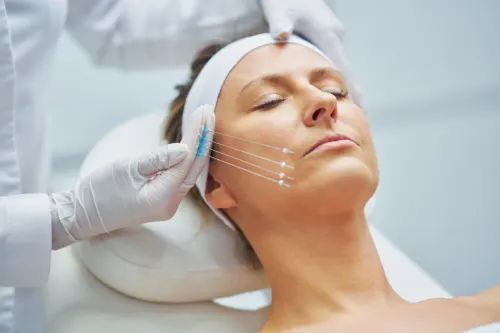
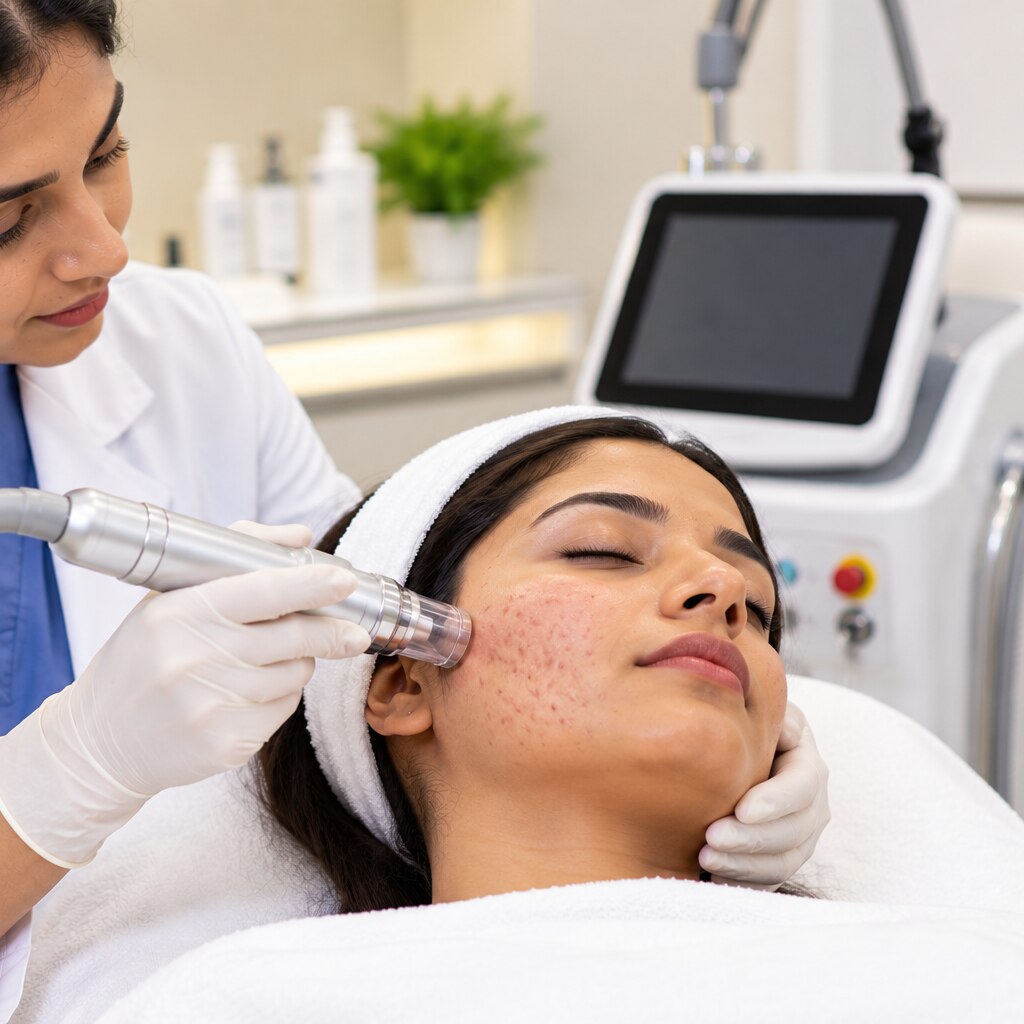
A depressed scar, a dark mark and an enlarged pore need different solutions, so choosing a treatment before identifying what you have can waste time and increase irritation or pigmentation. By the end, you will be able to match common acne-scar patterns to realistic treatment options, compare their trade-offs and prepare for a safer consultation.
Key takeaways
- Flat red or brown marks are not the same as indented acne scars.
- Match rolling, boxcar and ice-pick scars to different treatment approaches.
- Compare needle depth, laser intensity, downtime and risk before choosing.
- Ask about active acne, skin tone, medicines and combination treatment plans.
Identify the Mark Before You Treat It
A true acne scar changes the skin’s structure: you can see or feel a depression or raised area that remains after the spot heals. A flat red or brown mark is usually post-inflammatory erythema or hyperpigmentation, not a scar, and often fades without texture treatment.
- Active breakout: look for redness, tenderness, warmth, a whitehead, pus or a swelling that is changing over days. Do not treat this as a finished scar; ongoing inflammation can create new scars and raise pigmentation risk after procedures.
- Enlarged pore: this looks like a small, round opening with a visible plug or shadow. It usually follows the same pattern as nearby pores and appears less obvious when the skin is gently stretched.
- Depressed scar: the indentation stays in place when you stretch the skin. Atrophic acne scar types include narrow, deep ice-pick scars; wider, sharply edged boxcar scars; and shallow, wave-like rolling scars.
- Raised scar: firm tissue sits above the surrounding skin. Hypertrophic scars stay within the original spot, while keloids extend beyond it.
- Lingering mark: a flat red, pink, brown or grey patch has colour but no dip, ridge or change in texture.
Photograph the area in consistent lighting and check it after the breakout has settled. A clinician can assess depth, tethering and pigmentation risk before choosing treatment; one procedure rarely suits every scar pattern.
Match Each Scar Pattern to the Right Treatment
The best acne scar removal treatment depends on whether the scar is narrow, broad, tethered, raised or only a surface mark.
| Pattern | What it looks like | Treatments that fit |
|---|---|---|
| Ice-pick | A narrow, deep opening with steep sides | TCA CROSS targets individual pits with concentrated trichloroacetic acid. Punch excision removes a small scar; punch elevation lifts its base. Neither treats widespread texture in one session. |
| Boxcar | A wider depression with defined, vertical edges | Punch excision or punch elevation suits a few deep scars. Fractional resurfacing can improve shallower or more numerous depressions. |
| Rolling | A shallow wave-like hollow that changes in angled light | Subcision for rolling scars releases fibrous strands tethering the skin. Bruising, swelling and temporary contour irregularity are possible. |
| Raised | A firm hypertrophic scar or keloid above the surrounding skin | Intralesional corticosteroid injections, silicone-based therapy and pressure-based treatment may be used. Avoid choosing resurfacing or collagen-stimulating procedures without specialist assessment. |
| Superficial marks or texture | Red or brown marks, or mild roughness without a deep pit | Chemical peels can address selected surface concerns; they do not release tethering or fill deep scars. |
A clinician may combine treatments because one procedure rarely matches mixed scar patterns. Control active acne first: ongoing inflammation can create new scars and raise the risk of post-inflammatory hyperpigmentation after treatment.
Compare Microneedling, Dermapen and Fractional CO2 Laser
Microneedling for acne scars and Dermapen are closely related, not competing technologies. Dermapen is a motorised pen that performs microneedling with adjustable needle depth and speed; manual or roller microneedling uses the same basic principle but offers less device control.
| Option | Intensity and discomfort | Downtime | Sessions | Cost drivers | Pigmentation risk |
|---|---|---|---|---|---|
| Microneedling | Low to moderate; prickling and heat are common | Redness and swelling for about 1–3 days; pinpoint bleeding can occur | Usually several sessions spaced weeks apart | Treatment area, needle depth, provider experience and number of visits | Lower than fractional CO2 laser, but post-inflammatory hyperpigmentation remains possible |
| Dermapen | Similar biological effect, with more consistent depth and potentially greater precision | Usually 1–3 days of redness; deeper settings increase recovery | Usually several sessions | Device quality, treatment depth, area size and whether add-ons are used | Similar to microneedling; settings and aftercare matter |
| Fractional CO2 laser | Higher intensity; heat, stinging and swelling are stronger | Often several days to around two weeks, depending on settings | Fewer sessions may produce more change, but repeat treatment can still be needed | Laser type, energy settings, treatment area, numbing, aftercare and clinician expertise | Highest of these options, especially with darker skin; pigment-control planning and strict sun protection are important |
Fractional CO2 laser treats microscopic columns rather than the entire surface, so it heals faster than fully ablative resurfacing. Ablative settings can improve deeper texture more, but they also increase downtime and pigmentary change risk.
Brown or Black skin needs conservative laser settings and careful selection. Active acne should be controlled before any option, because new inflammation can create scars and increase post-inflammatory hyperpigmentation risk.
What a Clinician Checks Before the First Procedure
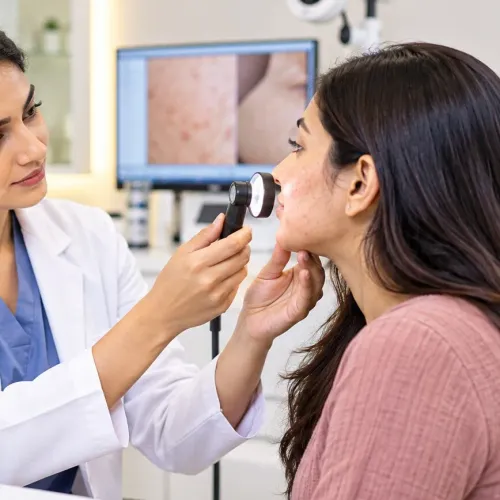
The first acne-scar consultation should confirm what is being treated, not assume every uneven mark is a scar. The clinician examines your skin in good light, checks whether depressions are tethered, and feels the scar edges to judge depth and skin thickness. Photographs, medical history and previous procedures help set a baseline.
| Finding | How it changes the plan |
|---|---|
| Active acne | Control breakouts first; treating inflamed lesions can spread irritation, create new scars and increase post-inflammatory hyperpigmentation. |
| Thin or fragile skin | Use a gentler setting or wider treatment intervals because excessive injury can prolong redness and healing. |
| Keloid history or raised scars | Avoid treating it like a depressed scar; silicone, pressure or intralesional corticosteroid treatment may be considered instead. |
| Recent isotretinoin use | Review the last dose and healing history before resurfacing or needling; timing is individual. |
| Bleeding-risk medicines | Check aspirin, anticoagulants and other medicines before any procedure that punctures or heats skin. |
| Poor wound healing, immunosuppression or infection | Delay elective treatment until the risk or infection is addressed. |
During treatment, the clinician cleans the skin, marks target areas and explains numbing, treatment intensity and wound care. Sun exposure matters: use broad-spectrum sunscreen, avoid tanning and follow dressing or cleansing instructions because healing skin discolours more easily.
Finesse Aesthetic’s choice between subcision, microneedling and fractional CO2 laser should therefore follow the scar pattern, medical history and recovery tolerance—not the treatment name alone. Expect improvement to be measured over months, not immediately after the procedure.
Related services
ACNE l ACNE SCARS l OPEN PORES At Finesse Aesthetic, we offer the Acne Buster Peel Therapy, a powerful and targeted treatment designed to combat acne and rejuvenate your skin. View service → |
ACNE l ACNE SCARS l OPEN PORES Subcision Subcision is a minimally invasive surgical procedure designed to treat depressed scars, particularly those caused by acne, trauma, or surgery. |
Plan Combinations, Recovery and Realistic Results
Combine treatments when your scars have different features, not simply because more procedures sound stronger. A combination acne-scar treatment might address tethered depressions with subcision, add volume to selected scars with dermal fillers, and improve surface texture with resurfacing.
Fillers raise a depression temporarily; they do not release scar tissue, and injections carry uncommon but serious risks such as vascular occlusion.
Active acne needs control before elective scar procedures. New breakouts can create new scars, while inflammation raises the risk of post-inflammatory hyperpigmentation, especially after laser treatment.
- Follow the treating clinician’s wound-care instructions exactly; do not pick peeling skin, scabs or crusts.
- Use the cleanser, moisturiser and prescribed ointment recommended for your procedure.
- Treat chemical peel aftercare as part of the procedure: avoid exfoliating acids, scrubs and retinoids until your clinician clears them.
- Apply broad-spectrum SPF 30 or higher and limit direct sun exposure. Sunscreen after laser treatment helps reduce darkening during healing.
- Restart acne medicines only on the schedule provided, since retinoids can irritate freshly treated skin.
Expect redness, swelling or peeling before improvement. Texture often begins to look better after several weeks, but collagen remodelling continues for months; meaningful results commonly require several sessions. Compare photographs under the same lighting at roughly three-month intervals, rather than judging the result in the first week.
Treatment usually softens scars and reduces their visibility—it rarely erases them.
Frequently asked questions
How can you tell an acne scar from a post-acne mark?
A scar changes skin texture, creating a depression or raised area. Flat red or brown marks are usually post-inflammatory erythema or hyperpigmentation.
Which treatment suits different acne scar patterns?
Rolling, boxcar and ice-pick scars have different structures, so a clinician matches treatment to scar depth, edges and tethering.
How do microneedling, Dermapen and fractional CO2 laser differ?
Microneedling and Dermapen use controlled needle punctures, while fractional CO2 laser creates columns of thermal injury. They differ in intensity, downtime and risks.
What does a clinician check before acne scar treatment?
The assessment covers active acne, scar type, skin tone, previous treatments, medicines, healing history and the risk of post-inflammatory hyperpigmentation.
Why are combination treatments used for acne scars?
Different scar features respond to different methods, so a staged plan can address tethering, edges, depth and surface texture without treating everything identically.
Related services
ACNE l ACNE SCARS l OPEN PORES Fractional CO2 Laser is a highly effective and advanced skin rejuvenation procedure designed to address various skin concerns. View service → |
ACNE l ACNE SCARS l OPEN PORES Microneedling Microneedling is a highly effective, minimally invasive treatment designed to rejuvenate the skin by reducing the appearance of acne scars and open... |
ACNE l ACNE SCARS l OPEN PORES Dermapen Dermapen is an advanced microneedling treatment designed to rejuvenate and revitalize your skin. |