Unwanted hair returns because follicles produce new strands on different schedules, and laser treatment cannot target every follicle at the same moment. By understanding pigment, growth cycles, skin tone, preparation and realistic outcomes, you can judge whether a treatment plan fits your hair, skin and expectations.
Key takeaways
- Laser heats hair growth structures; it does not pull follicles out.
- Plan several sessions because hairs respond during active growth phases.
- Dark, coarse hair usually responds better than light, grey or red hair.
- Avoid waxing before treatment and follow the clinic’s shaving and sun guidance.
How light energy reduces hair without removing every follicle
Light energy reduces hair by heating its growth structures, not by pulling the follicle out. During laser hair removal, melanin in the hair shaft and hair follicle absorbs the selected wavelength and converts it to heat.
That heat injures the follicle’s ability to produce a strong new hair, while the follicle itself remains in the skin. Shaving beforehand leaves this target in place; waxing or tweezing can remove the shaft that carries energy downward.
One session cannot reach every follicle effectively because hairs move through different growth stages. Laser works best during anagen, the active growth phase, when the hair is connected to the follicle’s deeper structures.
Resting follicles have less useful pigment and do not receive the same damaging effect, so appointments are spaced until another group enters anagen. Body area, regrowth pattern and skin response determine the interval; maintenance treatments can address later regrowth.
Permanent hair reduction means a lasting decrease in the number of hairs that regrow after a treatment course, not guaranteed permanent hair removal. Some follicles recover, and hormonal changes can stimulate new growth. Remaining hair often becomes finer and slower-growing, reducing shaving frequency without making the area permanently hair-free.
Dark, coarse hair usually gives the laser a stronger melanin target than very light hair.
Why you need several sessions and planned intervals
A single appointment treats only follicles containing hair in the anagen phase, the active stage of the hair growth cycle. Follicles in the resting phase do not absorb enough laser energy to respond, and they enter anagen at different times.
That is why the first treatment may reduce visible hair by only about 10% to 25%, rather than clearing the area.
A treatment plan usually follows these scheduling principles:
- Many people need six or more laser hair removal sessions because each visit targets a different group of follicles entering anagen.
- Providers commonly space appointments about four to six weeks apart, then adjust the gap according to how quickly treated hair returns.
- Facial hair often regrows sooner than hair on the legs or body, so the interval can differ by treatment area.
- Attend when enough new growth is present to target, but do not wax, tweeze or epilate between visits; shaving leaves the follicle in place.
The goal is permanent hair reduction, not guaranteed permanent hair removal. Remaining hair often grows finer, lighter or more slowly, while hormonal conditions that stimulate excess growth can produce new hairs after the initial course. Maintenance treatments can then preserve the reduction, and treating the underlying hormonal condition may improve consistency.
Which hair and skin types respond best
Dark coarse hair responds best because its melanin absorbs more light and converts it into follicle-heating energy. Blonde, red, grey and white hair contain less suitable pigment, so treatment can produce weak or uneven reduction; electrolysis may be worth discussing for individual pale hairs.
Skin colour affects both settings and risk. Laser energy can be absorbed by melanin in the skin as well as the hair, increasing the chance of burns or dark or light patches. A skin tone laser hair removal assessment helps match the wavelength and fluence to you.
| Feature | Better response or safer approach | What can reduce results |
|---|---|---|
| Hair colour | Dark, coarse hair | Blonde, red, grey or white hair gives the laser little target pigment |
| Skin tone | Correct settings for your complexion | Excessive energy can burn or alter pigmentation |
| Tanning | Untanned skin with broad-spectrum sunscreen | Recent tanning raises burn and pigment-change risk; treatment may be postponed |
| Device | A laser emits a narrow wavelength; IPL uses a broader band | Device, settings and operator experience affect safety and reduction |
| Darker skin | Nd:YAG laser is commonly preferred | Incorrect settings still carry risk |
| Hormonal growth | Treat the cause alongside hair reduction | Conditions such as polycystic ovary syndrome can stimulate new hairs and require maintenance |
Hormonal hair growth does not make treatment useless, but it makes the result less predictable. New hairs can appear after a course even when treated follicles respond well, so medical assessment and occasional maintenance may be needed.
How to prepare and what a session feels like
Shave before laser hair removal, following the clinic’s timing instructions, so hair remains inside the follicle without protruding above the skin. Avoid waxing and plucking for several weeks beforehand because removing the hair shaft deprives the laser of its target.
Avoid tanning, self-tanner and unnecessary sun exposure; apply broad-spectrum sunscreen, and tell the clinic about any recent tan, skin condition or medication.
1. During consultation, the practitioner reviews your medical history, checks hair colour and skin tone, examines the treatment area and sets realistic expectations. Ask whether a patch test is needed; it exposes a small area to the planned settings and helps identify an unsuitable reaction before full treatment.
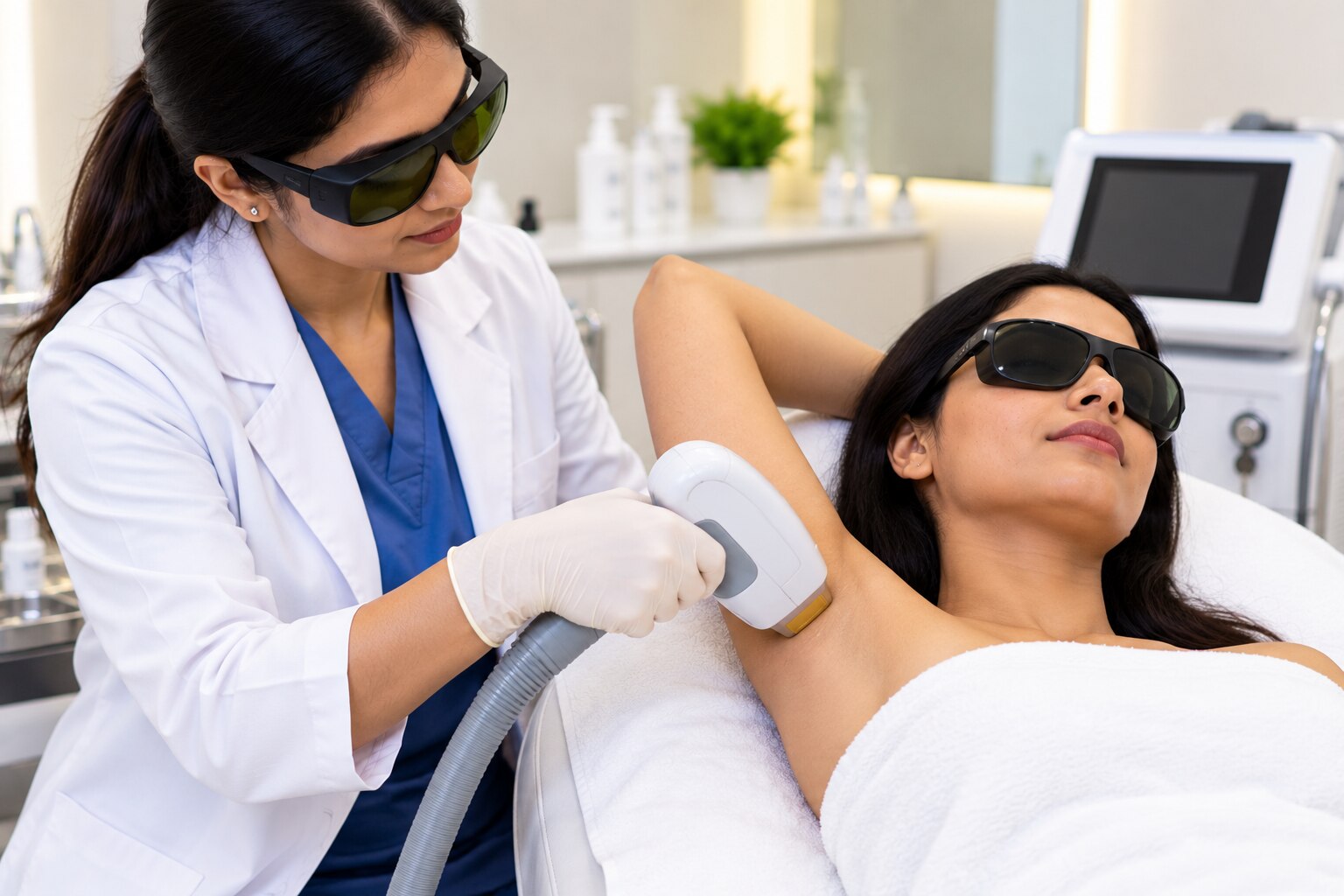
2. Before treatment, the area is cleaned and inspected. You and the practitioner wear laser eye protection, and the device settings are adjusted for the area, hair and skin.
3. During treatment, each pulse can feel like a quick snap, prickling heat or a rubber-band flick. Cooling from the device or a separate cooling system can reduce discomfort. The appointment length depends on the area.
4. Afterward, mild redness, warmth or swelling around follicles can last for a few hours. Use sunscreen, avoid tanning and intense heat until the skin settles, and follow instructions about products and shaving. Do not wax or pluck between sessions.
What to check before choosing a treatment plan
Choose a provider who explains the device, settings and risks for your specific hair and skin rather than selling a fixed package. Ask these questions before paying:
- Which wavelength or IPL filter will you use, and why does it suit my skin tone and hair colour?
- Will you perform a patch test, record the settings and explain what result would require stopping?
- Who provides the treatment, and how do you manage a burn, blister, pigment change or eye injury?
- Should I postpone treatment because of recent tanning, tattoos, active skin disease or a history of abnormal scarring?
- Do any of my medicines increase light sensitivity, including photosensitising medicines?
- Should I shave, and how long before treatment? Waxing, tweezing and epilation remove the follicle’s target.
Laser versus IPL is not a simple “stronger versus weaker” choice.
| Option | What it uses | What to compare |
|---|---|---|
| Laser | One specific wavelength or narrow wavelength range | Match the wavelength and cooling system to your skin tone and hair |
| IPL | A broad band of filtered light | Check the device, filters, operator experience and settings |
Ask whether fine facial or neck hair is suitable at all. Low-energy treatment in these areas has been associated with paradoxical hypertrichosis, in which nearby hair becomes thicker or denser.
Finesse Aesthetic should be able to explain the chosen device, patch testing, contraindications and maintenance plan; use the same questions with every provider. Expect long-term hair reduction, not guaranteed removal, especially if hormonal conditions continue stimulating new growth.
Related service
Experience the freedom of smooth, hair-free skin with our advanced Laser Hair Removal treatment at Finesse Aesthetic. View service → |
Frequently asked questions
How does laser hair removal reduce unwanted hair?
Melanin in the hair shaft and follicle absorbs the selected light wavelength and converts it to heat, damaging growth structures without pulling the follicle out.
Why are several laser hair removal sessions needed?
Hair grows in cycles, and laser responds best to hairs in the active growth phase. Several sessions treat new hairs as they enter that phase.
Which hair and skin types respond best to laser hair removal?
Dark, coarse hair usually absorbs laser energy more effectively. Light, grey and red hair contain less of the target pigment and can respond less predictably; the wavelength and settings must also suit your skin tone.
How should you prepare for a laser hair removal session?
Avoid waxing and plucking before treatment because they remove the hair root the laser targets. Follow the clinic’s instructions on shaving, sun exposure, tanning products and skincare.
What should you check before choosing a laser hair removal plan?
Ask which device and wavelength will be used, how intervals are planned for your hair cycle, whether a patch test is offered, and who will assess your skin and hair.