A polished clinic, a long treatment menu and attractive before-and-after photographs cannot tell you whether the proposed treatment fits your diagnosis, skin tone, medical history or goals. By the end, you will have a practical way to verify the doctor, test the quality of the consultation, compare treatment trade-offs and identify safety gaps before paying a deposit.
Key takeaways
- Check the doctor’s current registration with the NMC or State Medical Council.
- Choose a clinic that diagnoses your skin concern before recommending treatment.
- Compare every option by target concern, downtime, maintenance and total cost.
- Avoid procedures when the diagnosis, benefits or aftercare plan remains unclear.
Verify the doctor, registration and medical supervision
Confirm the full name of the doctor who will diagnose and treat you, then check the doctor’s current medical registration number through the National Medical Commission’s Indian Medical Register or the relevant State Medical Council. This Indian Medical Register verification shows whether the registration is current; it does not by itself prove specialist training.
1. Ask whether the treating doctor is a qualified dermatologist with MD or DNB Dermatology for skin disease and dermatological procedures, or a plastic surgeon with MCh or DNB Plastic Surgery for surgical treatment.
2. Treat “board-certified” as meaningful only when the clinic names the certifying board and you can confirm the doctor’s current status. Association membership or a short cosmetic course is not equivalent to specialist certification.
3. Identify who will inject, operate the laser, perform the peel and monitor anesthesia. A salesperson, technician or junior clinician should not replace a personal consultation with the treating doctor.
4. Before booking, ask: “Will the doctor examine me personally?”, “What diagnosis are you treating?”, “What alternatives are suitable?”, “Who handles complications after hours?”, and “Where would surgery take place?”
5. For surgery, verify the licensed or accredited operating facility, qualified anesthesia provider, emergency arrangements and postoperative follow-up. A surgeon’s credentials alone do not confirm safe medical supervision.
If the clinic will not name the treating doctor, provide a medical registration number, explain the diagnosis or answer who manages complications, postpone payment and seek another consultation.
Look for a diagnosis before you choose a treatment
A personalized skin diagnosis starts with a medical history, not a treatment menu. The doctor should record:
- Medical conditions, allergies, medications and supplements
- Previous procedures, including peels, lasers, injections and surgery
- Pregnancy or breastfeeding status
- Skin type, healing history and any tendency to form raised scars
- Current skincare products and your treatment goals
Expect an examination under bright, even lighting. A selfie cannot show texture, subtle colour change or active inflammation reliably.
| Problem | What the clinician should look for | Why the distinction matters |
|---|---|---|
| Acne | Active inflamed or blocked lesions | Needs an acne plan, not automatic resurfacing |
| Post-inflammatory hyperpigmentation | Dark marks left after inflammation | Treating pigment without controlling inflammation can prolong it |
| Melasma | Often symmetrical facial patches | Heat, light and unsuitable procedures can worsen it |
| Rosacea | Persistent redness, flushing and sensitivity | Irritating treatments can intensify symptoms |
| Fungal folliculitis | Uniform, itchy, acne-like bumps | It needs a different medical approach |
| Acne scarring | Permanent textural change after acne | The plan targets texture, not active lesions |
Ask the clinician to state whether the issue is acne versus melasma versus rosacea, or another condition. Postpone cosmetic treatment for active infection, open wounds or uncontrolled eczema. Sudden or unexplained changes also need assessment first.
Sudden, patchy or rapidly worsening hair loss requires diagnosis before restoration. Scalp examination, dermoscopy, blood tests or biopsy may be needed. Do not accept a facial or device session as treatment for infection, inflammatory disease, medication-related change or another underlying condition.
Compare treatments by target, recovery and maintenance
Compare each option against the diagnosed problem, not against a clinic’s menu. Record discomfort, downtime, session count, maintenance and evidence; a low first-visit price can become an expensive course.
| Option | Best matched to | Recovery and maintenance |
|---|---|---|
| Facial | Temporary cleansing or hydration | Little downtime; repeated visits; limited effect on disease or scarring |
| Prescription cream | Acne, inflammation or pigment drivers | No procedure recovery; requires correct diagnosis, safe dosing and monitoring; ongoing use |
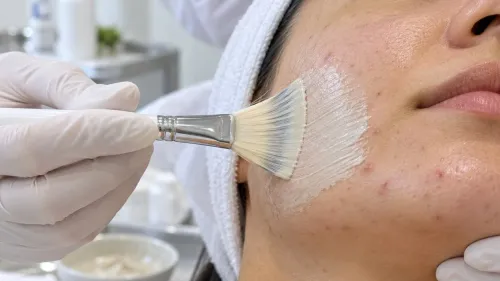
| Superficial chemical peel | Surface pigment, acne or texture | Shorter recovery; repeated sessions; ask for evidence |
| Medium or deep peel | Selected severe texture or pigment problems | More injury and downtime; higher risks of pigment change, infection and scarring |
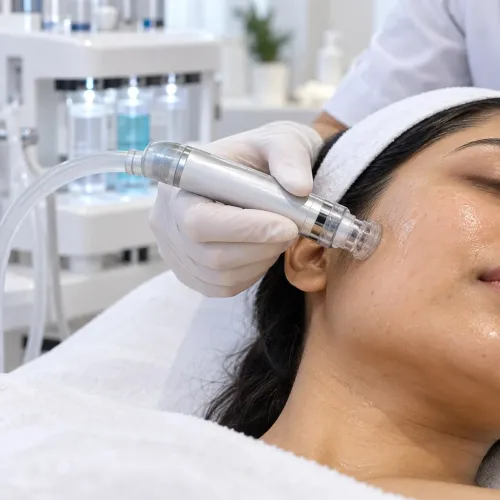
| Microneedling | Some textural scars and collagen concerns | Several sessions; pinpoint bleeding or redness; results depend on microneedling depth |
| Radiofrequency | Firmness or selected contour concerns | Several sessions; settings and heat endpoint determine risk and effect |
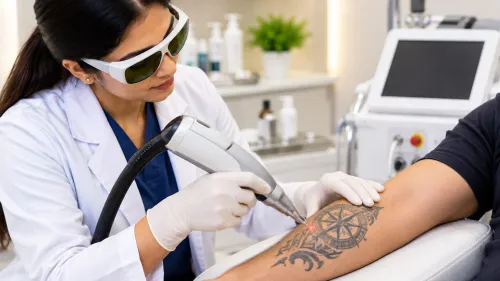
| Laser | Hair removal, pigment, vessels or resurfacing | Course or staged treatment; wavelength and pulse settings determine suitability |
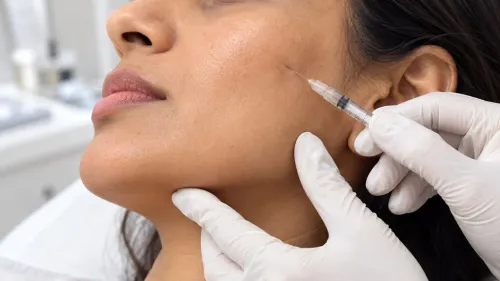
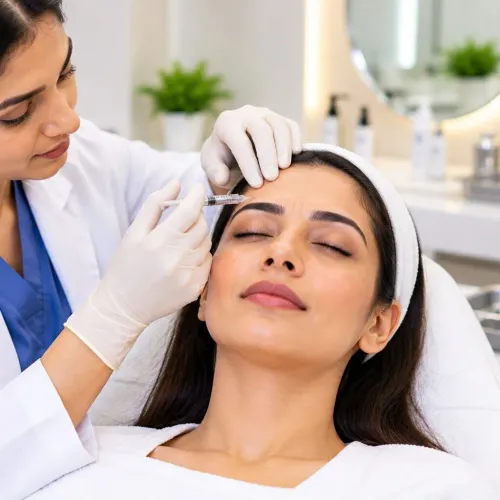
| Injectable | Muscle movement or lost volume | Temporary or ongoing maintenance; botulinum toxin and filler solve different problems |
For a chemical peel comparison, request the exact ingredient, concentration and peel depth. For microneedling, ask for the device and needle depth; for radiofrequency, request the device, radiofrequency settings, treatment endpoint and evidence for your concern.
A laser consultation must name the laser wavelength, pulse settings, operator’s experience with your skin tone and sun-avoidance instructions. Hair removal needs multiple sessions because it targets pigment in growing hair; blonde, white, grey and some red hair respond poorly.
Botulinum toxin reduces selected muscle activity for about three to four months. Filler adds volume, so neither replaces diagnosis.
Identify when a procedure is the wrong choice
Postpone or reject a peel, needle, energy or laser treatment when the risk has not been assessed. An active infection, open wound, uncontrolled eczema, fresh tan or sunburn requires medical review first. A history of abnormal scarring is also a stop sign until the doctor discusses it with you.
1. Give the treating doctor your complete history before consent. Include recent isotretinoin use, all medicines and supplements, pregnancy or breastfeeding, cold-sore history and previous pigment changes after procedures. Ask how these factors affect treatment contraindications, preparation and aftercare. Do not hide a medication because the procedure is described as “non-surgical.”
2. Demand specifics for energy treatments. Poor laser settings, radiofrequency energy or peel strength can burn skin or cause lasting colour change. Ask for the exact device, settings, operator’s experience with your skin tone and sun-avoidance instructions; this is basic laser safety for skin tone.
Ask who will manage an emergency if filler enters a blood vessel and causes tissue death, vision loss or stroke.
3. Treat hair transplantation as a plan, not a cure. The clinic must establish the cause and pattern of hair loss before surgery. Donor hair is limited, native hair can keep thinning and visible growth takes time, so discuss medical treatment or monitoring first.
A sound clinic explains alternatives, limitations, complications, emergency contacts and follow-up before requesting payment. If it cannot answer these questions clearly, choose no procedure today.
Use evidence, total cost and aftercare to make the final choice
A sound skin clinic comparison starts with a written plan, not an introductory price. Request these details before paying:
- Diagnosis and proposed treatment
- Device, wavelength, settings, ingredient, concentration or product
- Number and spacing of sessions
- Preparation, recovery, sun protection and home care
- Maintenance schedule and total expected cost
- Likely benefits, limitations, complications and alternatives
- Follow-up arrangements and the revision or complication policy
This document supports informed consent and exposes hidden work. Compare the full treatment cost and maintenance burden, not the first-session offer.
| Option | Cost and maintenance question | What to verify |
|---|---|---|
| Botulinum toxin | Repeat treatment about every three to four months | Which muscles are treated and what ongoing appointments cost |
| Laser hair removal | A course is usual; maintenance may follow | Device, skin-tone settings, response of your hair colour and sun-avoidance plan |
| Pigment or scar treatment | Home products and review visits can extend the course | Exact products, daily use, recovery and duration |
Before-and-after photographs show possibilities, not predictions. Compare unedited images with matching lighting, pose, skin tone and follow-up time.
Guaranteed results, package pressure and one product recommended for every concern are warning signs. At Finesse Aesthetic, ask which named doctor assesses you, who performs the procedure, what examination supports the plan and how aftercare and follow-up work.
Choose the clinic that explains why one option fits your diagnosis, why another does not and what happens if recovery or results differ from expectations.
Related services
ACNE l ACNE SCARS l OPEN PORES At Finesse Aesthetic, we offer the Acne Buster Peel Therapy, a powerful and targeted treatment designed to combat acne and rejuvenate your skin. View service → |
PIGMENTATION Chemical Peels are a popular non-invasive cosmetic treatment aimed at rejuvenating and improving the texture of the skin. View service → |
Frequently asked questions
How do I verify a skin doctor’s registration in India?
Confirm the doctor’s full name and check the current registration number through the National Medical Commission’s Indian Medical Register or the relevant State Medical Council. Registration confirms current medical registration, not specialist training.
Why should a clinic diagnose my skin before recommending treatment?
Different conditions can look similar but require different care. A proper consultation should identify the concern, review your medical history and explain why the proposed treatment fits.
What should I compare when choosing a skin treatment?
Compare the treatment’s target concern, expected results, recovery time, risks, maintenance schedule and total cost, including follow-up visits and products.
When is a skin procedure the wrong choice?
Pause when the diagnosis is unclear, the clinic guarantees results, the risks are not explained, you cannot follow aftercare instructions or a medical condition makes treatment unsuitable.
Related services
ACNE l ACNE SCARS l OPEN PORES Dermapen Dermapen is an advanced microneedling treatment designed to rejuvenate and revitalize your skin. |
ANTI-AGEING FORMA is a non-invasive skin rejuvenation treatment that uses radiofrequency energy to stimulate collagen production, resulting in firmer and... View service → |
ACNE l ACNE SCARS l OPEN PORES Microneedling Microneedling is a highly effective, minimally invasive treatment designed to rejuvenate the skin by reducing the appearance of acne scars and open... |
PIGMENTATION At Finesse Aesthetic, we offer advanced treatments for melasma, a skin condition causing dark patches on the face. View service → |