A Hydrafacial can make skin feel cleaner, smoother and more hydrated, but “deep cleansing” does not mean removing every blackhead or treating acne at its source. By the end, you will understand the treatment sequence, identify suitable and unsuitable concerns, compare it with other options, and know what to check before booking.
Key takeaways
- Expect cool, wet passes, light suction and mild tingling—not needles or scraping.
- Deep cleansing removes surface buildup and some congestion, not every acne lesion or scar.
- Postpone treatment over sunburn, active irritation, open wounds or a recent aggressive peel.
- Ask who performs the treatment, which solutions are used and what aftercare you need.
What happens during a Hydrafacial, step by step
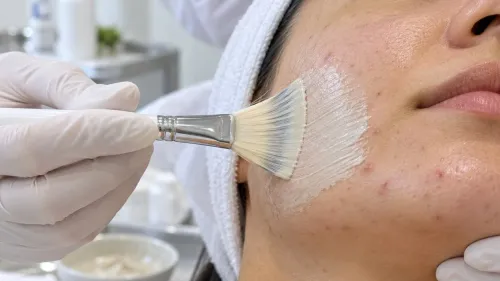
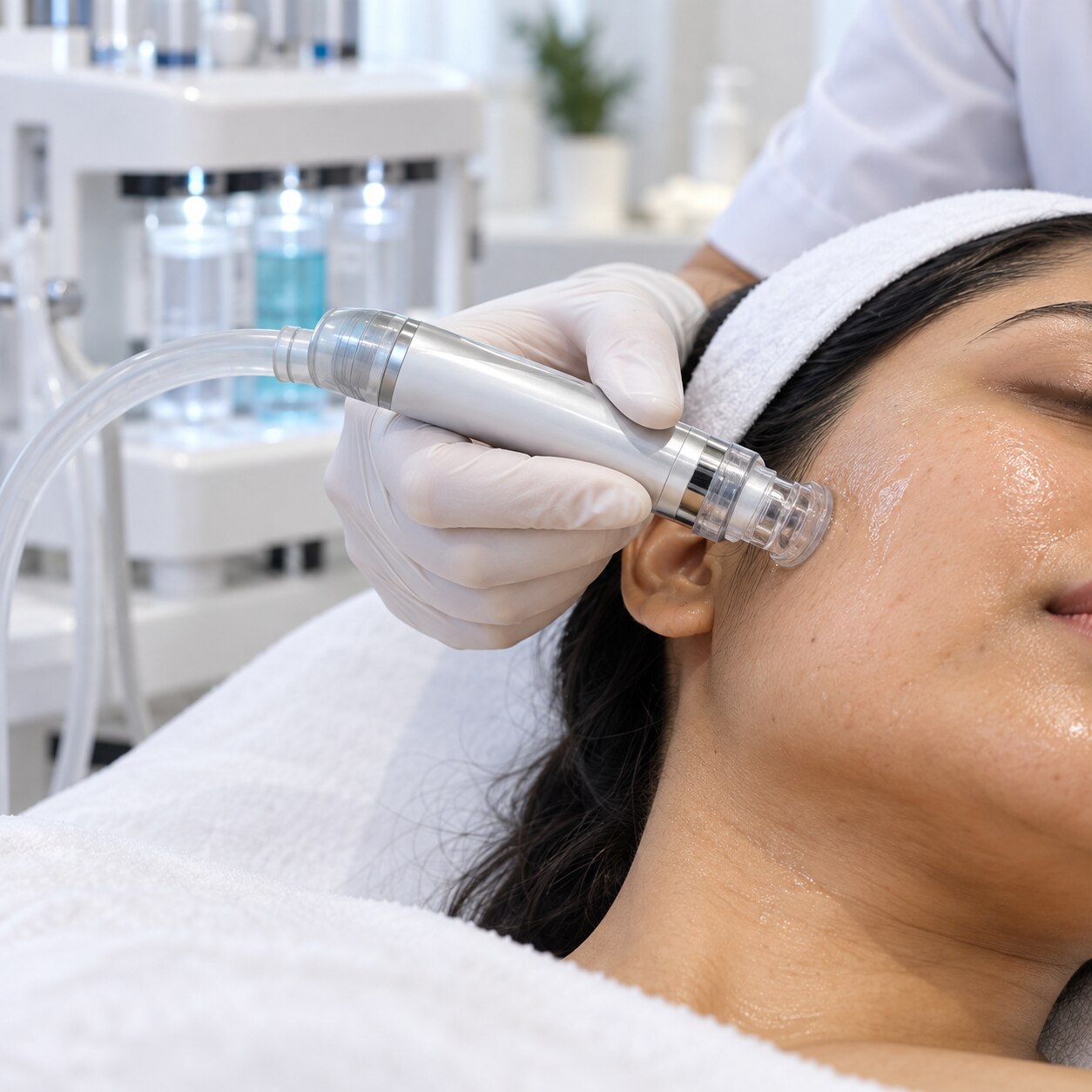
Most patients experience a series of wet, cool passes rather than needles or abrasive scraping. You may feel light suction, a moving tip and mild tingling from the solutions; intensity changes with your skin condition and the practitioner’s settings.
1. Cleansing removes makeup, sunscreen, oil and surface debris. The practitioner examines your skin and asks about sensitivity, allergies and recent treatments before selecting the solutions and suction level.
2. Exfoliation uses the device tip to loosen dead stratum-corneum cells. You may feel a polishing sensation, but it should not feel like painful scraping.
3. Acid resurfacing applies a solution containing exfoliating acids to lift remaining buildup and smooth the surface. Stinging or warmth can occur, so tell the practitioner immediately if it becomes uncomfortable.
4. Vortex extraction uses controlled vacuum and fluid flow to loosen and collect some pore contents. It can feel like repeated tiny pulls around the nose and chin, but it will not remove every blackhead or empty sebaceous glands.
5. Serum infusion spreads moisturising and treatment ingredients across the freshly treated skin. This often leaves a dewy finish, but the immediate hydration is mainly surface-level and does not replace daily moisturiser or barrier care.
The complete Hydrafacial treatment steps should be adjusted or stopped over broken, sunburned or actively inflamed skin. Ask which solution ingredients will touch your face if you have reacted to fragrances, preservatives, botanicals or acids before.
What “deep cleansing” can and cannot remove
Deep cleansing in a Hydrafacial means removing surface debris, loosened stratum-corneum cells and some pore contents with liquid and vacuum.
Vortex extraction can lift surface sebum, dead skin and residue, including mild congestion and makeup buildup, but it does not clean below the epidermis, draw sebum from sebaceous glands or remove “toxins.” It also will not extract every blackhead or treat acne at its cause.
| Concern | What a Hydrafacial can realistically do | What it cannot do |
|---|---|---|
| Dullness | Remove surface buildup and improve the look of freshness | Permanently change deeper skin structure |
| Dehydration | Add temporary surface hydration through humectant or moisturising ingredients | Replace daily moisturiser and barrier care |
| Rough texture | Smooth some unevenness caused by superficial dead-cell buildup | Remodel deep acne scars |
| Mild congestion | Clear some loose pore debris and excess surface oil | Reliably clear inflamed or severe acne |
| Makeup buildup | Lift residual makeup and other surface film | Remove material embedded below the skin surface |
| Deep wrinkles or laxity | Produce a temporarily smoother appearance | Significantly tighten lax skin or erase established deep wrinkles |
| Substantial pigmentation | Improve brightness when dull surface buildup contributes to uneven tone | Remove deeper or established pigment in one session |
The realistic result is cleaner-feeling, softer-looking skin rather than a deep medical extraction. Redness, tightness or dryness after an aggressive pass can worsen sensitivity, and irritation can trigger post-inflammatory hyperpigmentation, especially in darker skin tones. Persistent acne, deep scarring, laxity or significant pigmentation needs a different assessment and treatment plan.
Hydrafacial compared with facials, peels and acne treatment
Choose a Hydrafacial for immediate surface refreshment: dullness, dehydration, rough texture, makeup buildup and mild congestion. Choose another treatment when the problem involves deep scarring, significant pigmentation, active inflammatory acne or lasting skin remodelling.
| Option | Best fit | Main limitation |
|---|---|---|
| Hydrafacial | Surface texture, dryness and mild comedonal congestion | Does not remodel deep scars, remove substantial pigmentation or treat moderate-to-severe acne |
| Conventional facial | Relaxation, cleansing and basic hydration | Results depend on technique; manual extraction can irritate skin or leave marks |
| Chemical peel | Pigmentation, uneven texture and selected acne concerns | Stronger peels require careful selection and carry irritation and post-inflammatory hyperpigmentation risks |
| Carbon laser facial | Oiliness, superficial dullness and mild pore or texture concerns | Not a reliable treatment for deep scars or cystic acne |
| Medical acne treatment | Papules, pustules, nodules and recurring breakouts | Requires diagnosis and consistent treatment, such as topical retinoids or benzoyl peroxide |
A conventional facial with careful manual extraction suits a few accessible blackheads, but forcing blocked pores creates inflammation. Hydrafacial suction is gentler for superficial congestion, yet it will not empty every pore or stop new acne from forming.
Select a chemical peel when pigmentation or persistent roughness is the priority, and ask which acid, concentration and downtime apply. A carbon laser facial is another option for superficial oil and texture concerns, not a substitute for scar treatment.
Deep rolling or ice-pick scars need procedures that stimulate collagen at depth. Active acne needs medical control first; treating inflamed lesions with suction or acids can worsen irritation. A clinician should also assess rosacea, fragile capillaries and pigment-prone skin before choosing any device or peel.
Who should postpone treatment and what recovery feels like
Postpone treatment if your skin is broken, sunburned, infected or actively inflamed. Treating compromised skin adds friction, suction and solution exposure, which can worsen irritation or spread infection.
- Active eczema or dermatitis
- A rosacea flare with marked redness, warmth or flushing
- Sunburn, open wounds or peeling skin
- Bacterial, fungal or active herpes infection
- Recent waxing, which can leave the surface sensitised
- Recent laser treatment until the treating clinician confirms that the skin has healed
- Known sensitivity to an ingredient in the treatment solution
- Isotretinoin use, unless the prescribing doctor and practitioner have cleared the procedure
Tell the practitioner if you develop frequent flushing or have fragile capillaries. They may lower suction or postpone treatment, because a Hydrafacial will not treat rosacea’s vascular component. Ask to see the ingredient list: acids, fragrance, preservatives and botanical extracts can sting or trigger contact dermatitis.
Keep solution and suction away from the ocular surface and eyelid margin. Liquid in the eye can cause chemical irritation, while an unsuitable tip can injure delicate eyelid skin.
Recovery usually feels like mild tingling during treatment, followed by temporary tightness, pinkness or warmth. These effects often settle within several hours, though sensitive skin can remain pink longer. Expect little to no downtime, but avoid scrubs, strong acids, retinoids, heavy heat and direct sun until the skin feels calm.
Seek medical advice for worsening pain, swelling, blistering, spreading redness or eye symptoms.
Questions to ask before booking a Hydrafacial
Ask questions that reveal who will treat you, what touches your skin, and why the protocol fits your skin rather than accepting a standard package.
1. Who performs the treatment, and will they examine your skin first? Ask how they manage rosacea, flushing, fragile capillaries, acne and pigment concerns. During a flare, suction and friction can worsen redness; reducing intensity or postponing treatment is safer.
2. Which treatment solution will you use, and can I see its ingredient list? Disclose any history of treatment solution sensitivity, eczema, fragrance reactions or contact dermatitis. Acidic exfoliants, preservatives and botanicals can sting or trigger a rash.
3. What is your infection control process? Confirm that single-use tips are opened for you and discarded afterward. Ask how the reusable handpiece, tubing and fluid-contact parts are cleaned and disinfected according to the device manufacturer’s validated instructions; residual fluid can carry microorganisms between clients.
4. What makes me suitable today? Postpone treatment over sunburn, open wounds, active eczema or dermatitis, bacterial or fungal infection, or herpes lesions. Tell the practitioner about recent waxing, laser treatment and isotretinoin use, then follow their specific timing advice.
5. What result is realistic, and what will you do if my skin reacts? Hydration is largely temporary surface hydration, not a replacement for moisturiser and barrier care. At Finesse Aesthetic, these questions help you compare a tailored protocol with a routine facial rather than choosing by treatment name alone.
Related services
MEDICATED FACIALS Hydrafacial MD - Deluxe & Signature Hydrafacial MD utilizes advanced vortex technology to deliver nourishing serums deep into the skin, promoting a smoother texture, minimizes pores,... View service → |
MEDICATED FACIALS Hydraboost Our Hydraboost Facial employs a specialized infusion technique combining hyaluronic acid and potent antioxidants to deeply hydrate and nourish the... |
Frequently asked questions
What happens during a Hydrafacial?
A practitioner uses a handheld device for wet, cool passes that cleanse, exfoliate, extract and hydrate the skin. You may feel light suction and mild tingling while the practitioner adjusts the intensity and solutions.
What can a Hydrafacial remove?
It can lift surface oil, dead skin and some pore congestion through cleansing, exfoliation and suction. It does not remove deep acne lesions, acne scars, infections or all blackheads in one session.
How does a Hydrafacial compare with a facial, peel or acne treatment?
A Hydrafacial combines device-assisted cleansing, exfoliation, extraction and hydration. A traditional facial relies more on manual techniques, a chemical peel uses an acid solution for controlled exfoliation, and acne treatment targets the causes of acne with a medical plan.
Who should postpone a Hydrafacial?
Postpone treatment if you have sunburn, open wounds, active skin infection, significant irritation or a recent aggressive peel. Tell the practitioner about prescription retinoids, isotretinoin and other procedures before booking.
What does Hydrafacial recovery feel like?
Most people return to normal activities quickly, with skin feeling clean and hydrated. Temporary redness, tightness or sensitivity can occur, so follow the provider’s instructions about sun exposure, skincare products and makeup.