A “medicated facial” can mean anything from gentle cleansing and comedone extraction to a superficial acid peel or device-based treatment, so the label alone does not tell you whether it suits your skin concern. By the end, you will be able to match the treatment to acne, pigmentation, scarring, dehydration or dullness, prepare for the appointment, and judge whether the result warrants further medical care.
Key takeaways
- Ask for the active ingredients, acid concentration, contact time and treatment endpoint.
- Choose prescription treatment for disease control, not a facial for temporary surface improvement.
- Disclose retinoids, isotretinoin, allergies, infections and recent procedures before treatment.
- Judge a clinic’s plan by diagnosis, measurable goals, review dates and realistic session numbers.
What a medicated facial actually includes—and which skin concern it suits
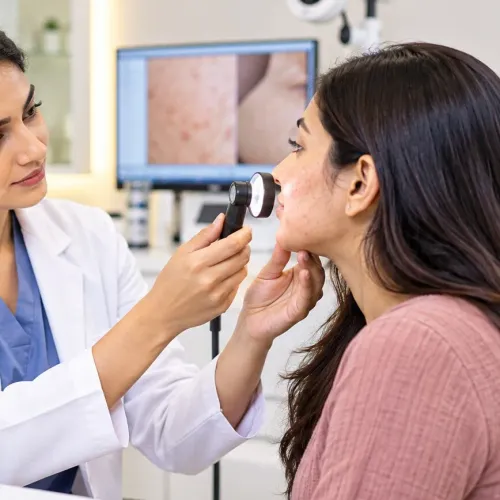
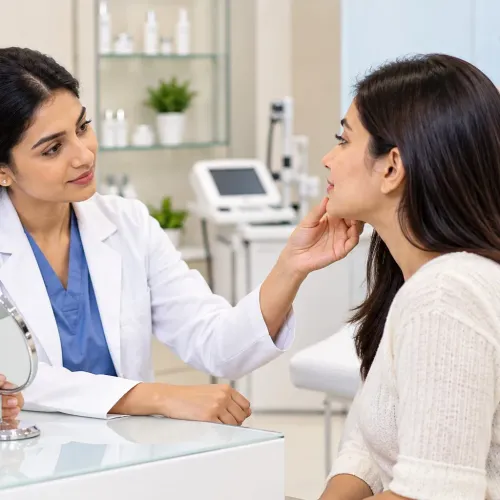
A medicated facial is a treatment label, not a standard medical procedure. The appointment may include cleansing, skin assessment, gentle comedone extraction, LED therapy and a clinician-selected topical product. Ask which active ingredients are being used, the acid concentration, contact time and intended endpoint; “glow” is not a treatment plan.
Salicylic acid can loosen oil and comedones, while glycolic acid can smooth surface roughness and dull-looking skin. Results depend on skin preparation, pH, acid concentration and contact time, and repeated sessions are usually needed. Neither option treats deep nodules, acne scars or the tendency to develop acne.
| Concern | When a medicated facial fits | What it cannot do |
|---|---|---|
| Comedonal acne | Mild blackheads, whiteheads and surface congestion | It will not control painful cysts or widespread inflammatory acne |
| Dullness or rough texture | Temporary smoothing from controlled exfoliation and hydration | It cannot reverse deep sun damage or replace daily sunscreen |
| Post-acne dark marks | Only when acne and irritation are also being controlled | Aggressive treatment can prolong post-inflammatory hyperpigmentation |
| True acne scars or persistent pigmentation | Use a diagnosis-led plan instead | A facial alone will not remodel depressed scars or reliably treat melasma |
Choose an acne assessment instead of repeated facials if lesions hurt, scar, spread across your chest or back, or fail to improve with appropriate topical treatment. Postpone treatment over sunburn, open wounds, active dermatitis or a herpes outbreak; disclose cold-sore history before treatment around the mouth or nose.
Facial, prescription treatment, peel, laser or microneedling: which should you choose?
Choose by diagnosis, not by whether your skin looks dull today. Active inflammatory acne, especially cystic acne, needs acne control; extracting a few spots will not stop new lesions.
| Option | Best match | Main limitation |
|---|---|---|
| Medicated facial | Temporary congestion, dehydration or surface dullness | It does not treat cystic acne, deep inflammation or true acne scars |
| Prescription treatment | Inflammatory acne and comedonal acne | Improvement takes consistent use, not one appointment |
| Chemical peel | Mild comedones, roughness and superficial post-inflammatory hyperpigmentation | It cannot correct deep scars or the tendency to form acne |
| Laser toning | Selected pigmentation, sun damage and some cases of melasma | Incorrect settings can aggravate pigmentation, particularly in darker skin |
| Microneedling | Established atrophic acne scars after active acne is controlled | It can worsen inflammation if used over active acne |
For active acne, ask a dermatologist about a plan using benzoyl peroxide 2.5%, adapalene or tretinoin; retinoids normalize follicular shedding but can cause dryness and peeling. Treating acne prevents new marks. A facial that irritates skin can prolong post-inflammatory hyperpigmentation.
If the problem is melasma or sun damage, confirm the diagnosis before choosing laser toning or a peel. Use broad-spectrum SPF 30 or higher daily; tinted sunscreen with iron oxides adds visible-light protection. Choose microneedling only after acne is quiet and the marks are true acne scars, not pigmentation.
What to disclose before treatment and what happens during the appointment
Tell the clinician about skin sensitivity, allergies and every current skincare product before treatment. Also disclose pregnancy and breastfeeding, medications, keloids, cold sores and recent procedures. Postpone treatment over sunburn, open wounds, active dermatitis or an active herpes outbreak; exfoliation and masking can worsen inflammation or spread infection.
Ask which active ingredient, concentration, pH and peel contact time they plan to use.
- Stop and restart retinoids, benzoyl peroxide or exfoliating acids only on clinical advice; irritated skin can react more strongly.
- State whether you are trying to conceive, pregnant or breastfeeding before any prescription acne product is selected. Topical retinoids are avoided during pregnancy.
- Report medicines that increase sensitivity or bleeding, including isotretinoin and anticoagulants.
- Ask how extraction will be limited. Aggressive squeezing can cause infection, prolonged redness and post-inflammatory hyperpigmentation.
| Stage | What should happen | What to confirm |
|---|---|---|
| Cleansing | Remove makeup, oil and sunscreen gently. | No scrubbing on irritated skin. |
| Skin preparation | Assess acne, pigmentation, sensitivity and treatment areas before applying actives. | The endpoint and expected sensation. |
| Extraction | Address selected comedones with controlled pressure. | It is not a cure for ongoing acne. |
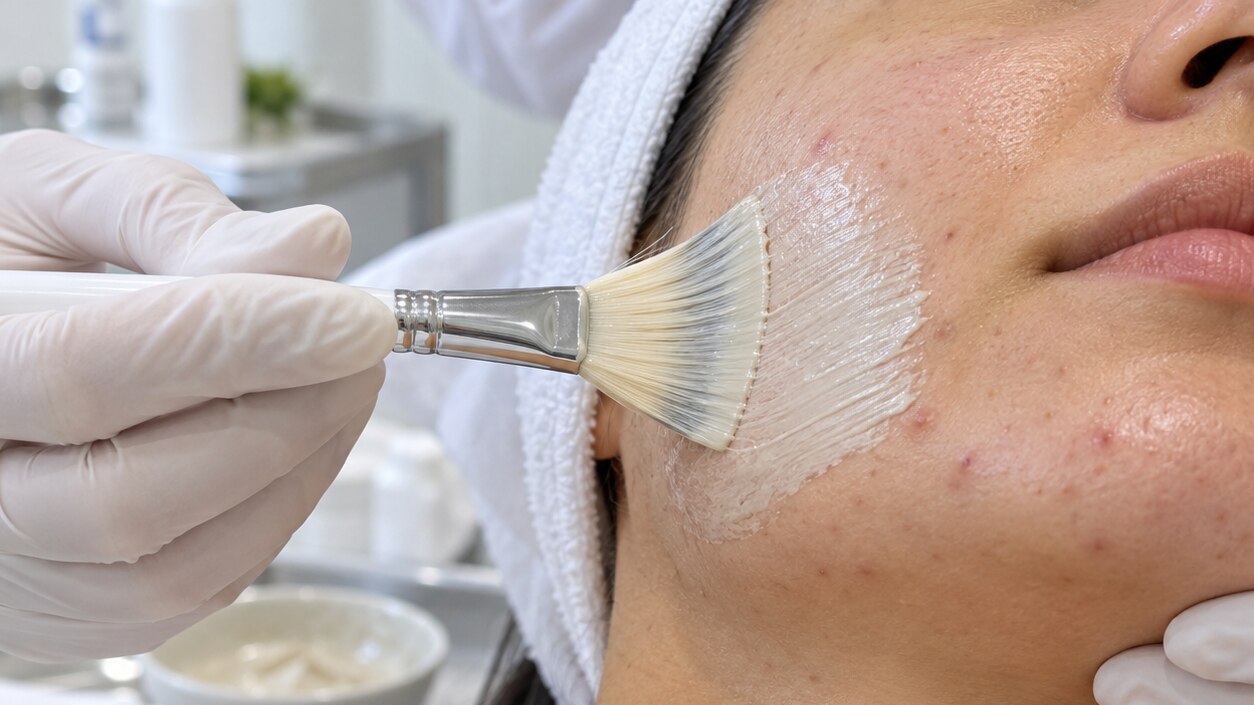
| Peel | Apply the named acid for a measured peel contact time, then remove or neutralise it as directed. | The acid, concentration and stop criteria. |
| Masking | Use a mask suited to the treatment, not prolonged occlusion over inflamed lesions. | What burning or pain requires removal. |
| Finish | Apply moisturiser, then broad-spectrum sunscreen, preferably SPF 30 or higher. | Which products you should use that evening. |
What sensations, downtime and aftercare should you expect?
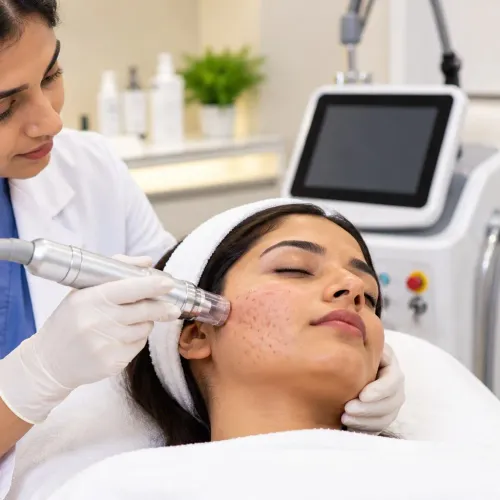
Stinging, warmth and tightness are common after a peel or laser toning. Mild redness and swelling can follow any procedure, while flaking is expected as a peel sheds surface cells. Microneedling can cause pinpoint bleeding and a sunburn-like feeling for several hours.
| Procedure | Expected reaction | Usual activity limits |
|---|---|---|
| Peel | Stinging, redness, tightness and later flaking | Avoid heat, exercise and swimming until irritation settles |
| Laser toning | Warmth, temporary redness or mild swelling | Resume routine activities when comfortable; avoid direct sun |
| Infusion | Brief redness, tenderness or small injection-site bumps | Makeup and normal activities often resume once the skin is intact |
| Microneedling | Redness, swelling, tenderness and pinpoint bleeding | Avoid makeup for 24 hours; delay exercise and swimming for 24 to 48 hours |
Use a gentle cleanser, plain moisturiser and broad-spectrum SPF 30 or higher immediately after treatment, unless your clinician gives different instructions. A tinted sunscreen containing iron oxides adds visible-light protection when pigmentation or melasma is a concern.
Restart retinoids, benzoyl peroxide and exfoliating acids only after stinging and redness have settled; this can take several days after a mild treatment and longer after microneedling or a stronger peel. Wait until the skin is closed before shaving.
Do not pick flaking skin. Contact the clinic for worsening pain, spreading redness, pus, blisters or swelling that affects your eyes. Darker skin tones face greater post-inflammatory pigment risk, so strict sun protection matters even after “no-downtime” laser treatment.
How many sessions do you need, and how do you assess a clinic’s plan?
Do not choose a number of sessions from the promised immediate glow. Set treatment frequency from your diagnosis, skin response and the procedure used; a superficial exfoliating facial may be spaced weeks apart, while irritated or pigment-prone skin needs longer recovery.
Expect gradual results, not a cure for deep acne, scars or the tendency to develop acne.
Ask the clinic to document a baseline: dated photographs in the same lighting, active-lesion count, oiliness, redness, texture and the size or colour of dark marks. An acne marks timeline should distinguish fading post-inflammatory hyperpigmentation from new acne, which keeps resetting the clock.
Use this checklist before booking:
- Ask what each session targets, why that number of sessions is recommended, and what result will trigger stopping, spacing or changing treatment.
- Ask whether adapalene, tretinoin or another acne treatment is needed alongside facials; extractions do not replace acne control.
- Ask how pigment risk will be reduced, especially for darker skin tones: conservative settings, strict sunscreen, suitable aftercare and a test area.
- Request the maintenance plan, including review dates and what happens if burning, prolonged redness or darker patches develop.
- Confirm the practitioner’s credentials and the exact peel or device, including acid name, concentration, pH and application time.
Finesse Aesthetic should be able to explain that plan in patient-specific terms rather than selling a fixed package. A clinic that guarantees brightening, ignores irritation, or treats every mark as the same diagnosis is not offering medically sound planning.
Related services
MEDICATED FACIALS The Pumpkin Facial is a rejuvenating medifacial that harnesses the natural enzymes and antioxidants found in pumpkin to deeply exfoliate and nourish... View service → |
MEDICATED FACIALS Our exclusive Finesse Signature Facial combines a revitalizing peel and customized mask to rejuvenate your skin deeply. View service → |
Frequently asked questions
What does a medicated facial include?
It may include cleansing, skin assessment, gentle comedone extraction, LED therapy and clinician-selected topical products. Ask about every active ingredient, acid concentration, contact time and intended endpoint.
Should you choose a facial, prescription treatment, peel, laser or microneedling?
Choose based on the concern and its cause. Prescription treatment targets acne disease, while facials focus on surface cleansing and temporary improvement. Peels, lasers and microneedling suit specific pigmentation, texture or scarring goals and require appropriate assessment.
What should you disclose before a medicated facial?
Tell the clinician about retinoids, isotretinoin, antibiotics, allergies, active infections, cold sores, pregnancy, recent waxing and recent peels, lasers or injectables.
What sensations, downtime and aftercare should you expect?
Expect sensations such as cleansing pressure, tingling, warmth or brief stinging, depending on the products used. Ask about redness, peeling, sun protection, cleanser restrictions and when to restart active skincare.
How many medicated facial sessions do you need?
The number depends on your diagnosis, treatment goal and response. A sound plan states the intended endpoint, review date, expected interval and what will change if your skin does not improve.
Related services
MEDICATED FACIALS The Black Olive Facial is a rejuvenating treatment that deeply cleanses and hydrates the skin using the nourishing properties of black olives. View service → |
ACNE l ACNE SCARS l OPEN PORES At Finesse Aesthetic, we offer the Acne Buster Peel Therapy, a powerful and targeted treatment designed to combat acne and rejuvenate your skin. View service → |
ACNE l ACNE SCARS l OPEN PORES Microneedling Microneedling is a highly effective, minimally invasive treatment designed to rejuvenate the skin by reducing the appearance of acne scars and open... |
MEDICATED FACIALS Hydraboost Our Hydraboost Facial employs a specialized infusion technique combining hyaluronic acid and potent antioxidants to deeply hydrate and nourish the... |