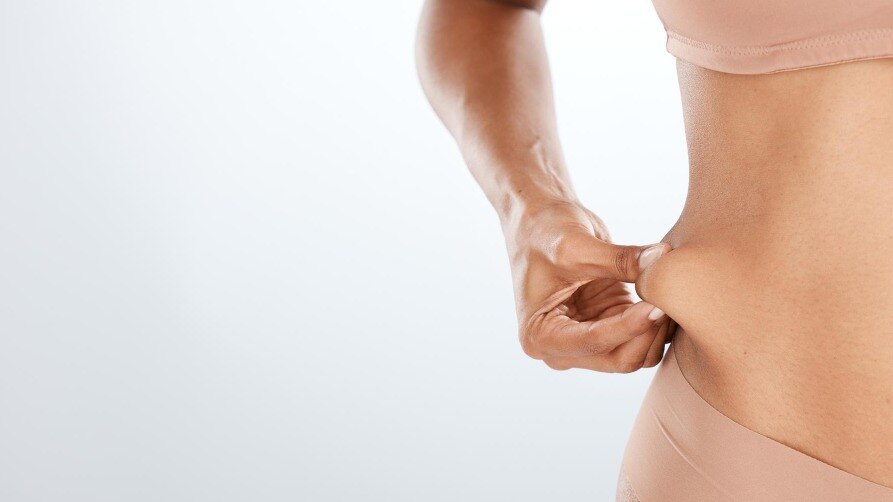
A localized fat deposit is a specific, pinchable pocket beneath the skin—not every area of fullness qualifies for surgical removal. By the end, you will know how surgeons assess the pocket, what happens during liposuction, which technology fits the plan, and when another treatment is safer or more effective.
Key takeaways
- Liposuction suits soft, pinchable fat beneath skin with good elasticity.
- It reshapes selected areas; it is not a weight-loss treatment.
- Compare downtime, results, risks, and number of sessions with non-surgical options.
- Check the surgeon’s qualifications, facility, anaesthesia plan, and aftercare before booking.
Which fat deposits are suitable for liposuction?
A visible bulge is more likely to be a localized fat deposit when it stays in one area despite a stable weight, feels soft and pinchable, and sits beneath skin that still springs back after you release it.
This superficial fat is the layer liposuction can remove; fat around internal organs is not accessible through cosmetic suction.
| What you notice | More likely explanation | What liposuction can do |
|---|---|---|
| A soft, pinchable bulge on the abdomen, flanks, hips, thighs, upper arms, back, male chest, knees or under the chin | Localized subcutaneous fat | Reduce the selected pocket and improve the outline |
| Fullness across the whole body that changes with overall weight | General weight gain | Liposuction is not a weight-loss treatment |
| Hanging, thin, crepey or folded skin with little fat underneath | Loose or excess skin | Liposuction alone will not reliably tighten or remove it |
Common abdomen liposuction areas include the upper and lower abdomen, waistline and flanks. A consultation distinguishes fat from muscle, fluid retention, a hernia or visceral fullness before treatment.
Good skin elasticity matters because the remaining skin must contract around the reduced volume. Liposuction will not reliably correct cellulite, stretch marks or uneven skin texture, and substantial future weight gain, pregnancy or ageing can change the contour.
If the area barely pinches or the skin hangs after weight loss, ask whether skin excision or another treatment fits better.
What happens during a liposuction procedure?
The procedure begins with a consultation to confirm the target areas, review your medical history and medicines, and discuss anaesthesia, scars, risks and expected contour changes. Before surgery, the surgeon marks the treatment zones while you stand so natural asymmetries and boundaries remain visible.
1. You receive local anaesthesia with sedation or general anaesthesia, depending on the area and extent of treatment.
2. Through small access incisions, the surgeon injects tumescent fluid: dilute local anaesthetic and epinephrine in saline. The fluid separates fat and reduces bleeding, but excessive absorption and lidocaine toxicity remain risks.
3. A thin cannula passes through the fat in controlled back-and-forth movements. Suction removes selected subcutaneous fat while the surgeon checks symmetry and contour.
4. The incisions may be left partly open for fluid drainage or closed with sutures. Dressings and a compression garment limit leakage, swelling and movement during early healing.
The technologies differ mainly in how they assist fat separation or suction:
| Technique | What it does | Practical point |
|---|---|---|
| Tumescent liposuction | Uses medicated fluid before suction | The standard foundation technique; it does not remove surgical risks |
| Power-assisted liposuction | Vibrating cannula helps break up and remove fat | Useful when dense or fibrous fat makes manual passage difficult |
| Ultrasound-assisted liposuction | Ultrasound energy loosens fat before suction | Requires careful heat control near skin and other tissues |
| Laser-assisted liposuction | A laser fibre heats and disrupts fat before suction | The fibre adds energy; it does not replace cannula removal or determine the result alone |
Who is a suitable candidate, and when is liposuction the wrong choice?
Liposuction eligibility is strongest when you have a localized subcutaneous fat pocket, a relatively stable weight, good skin elasticity and realistic expectations. You should be healthy enough for anaesthesia and recovery; liposuction contours selected areas rather than treating obesity, visceral fat or cellulite.
A consultation must cover smoking, diabetes, heart or lung disease, previous blood clots, pregnancy plans and every medicine or supplement. Aspirin, anticoagulants and some supplements can increase bleeding risk; never stop prescribed treatment without the clinician managing it. Active infection, uncontrolled illness or inability to follow recovery instructions can make surgery unsafe.
| Option | Better choice when | Why liposuction is not the answer |
|---|---|---|
| Liposuction | A defined fat pocket persists at a stable weight | It offers contouring, not major weight loss |
| Weight loss | Fullness is widespread or weight remains above your target | Removing selected fat will not address overall weight or visceral fat |
| Skin excision | You have loose skin after weight loss or poor skin recoil | Removing fat alone can leave hanging or rippled skin |
| Medical treatment | Fat is painful, firm, sudden or linked to an underlying condition | A diagnostic or medical problem needs assessment before cosmetic surgery |
Choose another approach if you expect perfect symmetry, cellulite removal, smoother stretch marks or a permanent result. Ageing, pregnancy and future weight change can alter the contour. Extensive treatment, multiple operations or serious medical conditions increase surgical and anaesthetic risk, so seek assessment at an appropriately accredited facility.
How does liposuction compare with non-surgical fat reduction?
A practical dividing line is the amount of contour change you want. Liposuction makes more sense for a clearly localized pocket, stable weight and reasonably elastic skin when you want a larger, more immediate change in one procedure. It still requires incisions and carries anaesthetic, bleeding, infection and fluid-balance risks.
It removes subcutaneous fat, not visceral fat, and is not a weight-loss treatment.
| Option | Main trade-off | Better fit |
|---|---|---|
| Liposuction | Mechanical removal in one planned procedure; surgery, anaesthesia and recovery required | A defined pocket needing a larger contour change |
| Cryolipolysis | Non-invasive cooling; smaller reduction per session, with repeat sessions possible | Small bulges when you prefer no incisions |
| Deoxycholic acid injection | Gradual reduction; several injections and swelling are common | Small fat deposits, especially beneath the chin |
| Radiofrequency fat reduction | Heat-based treatment with modest fat reduction; treatment courses are common | Mild fullness when avoiding surgery matters |
| Ultrasound-based treatment | Non-invasive energy with limited reduction per session | Small areas and modest goals |
| Continued weight loss | Addresses overall fat rather than one isolated pocket | Weight is still changing or fullness is widespread |
Choose non-surgical fat reduction when your priority is avoiding incisions and anaesthesia and you accept slower, smaller changes. Choose continued weight loss when general body fat remains the issue; liposuction will not replace it. A consultation should also assess skin laxity, because removing fat cannot reliably tighten excess skin.
What should you check before choosing liposuction?
A provider’s plan matters more than the device name. Compare the surgeon’s training and experience with your treatment area, the facility’s emergency arrangements, the anaesthesia provider, and before-and-after photographs showing comparable body types. Ask who will perform each stage and where follow-up happens.
Ask these questions before booking:
- What are my specific liposuction risks, including bleeding, infection, seroma, blood clots, anaesthesia problems and uneven contours?
- Is this standard or large-volume liposuction, and what monitoring and overnight care would the larger procedure require?
- What is the expected liposuction recovery time, when can I work and exercise, and how long must I wear a compression garment?
- What happens if swelling, fluid collection or a contour irregularity persists?
| Compare | Stronger answer | Warning sign |
|---|---|---|
| Facility | Named hospital or accredited surgical centre with emergency protocols | Vague location or no escalation plan |
| Result | Realistic discussion of asymmetry, revision and months of swelling | Promise of a permanent, flawless contour |
| Follow-up | Scheduled reviews and a direct contact for complications | Follow-up ends at discharge |
Finesse Aesthetic should be able to explain the planned volume, access sites, anaesthesia and follow-up schedule rather than relying on a treatment label.
Expect bruising and swelling to hide the early result; contour definition can take several months. Removed fat cells do not guarantee a fixed shape: weight gain enlarges remaining cells, while ageing or pregnancy can alter treated and untreated areas, so maintaining a stable weight remains part of protecting the result.
Frequently asked questions
Which fat deposits are suitable for liposuction?
Liposuction suits localized, soft and pinchable fat deposits that remain despite stable weight, especially when the overlying skin retains good elasticity. Common areas include the abdomen, flanks, thighs, hips, upper arms, back, chin and neck.
What happens during a liposuction procedure?
A surgeon marks the treatment area, gives anaesthesia, makes small incisions, injects fluid to reduce bleeding and discomfort, and guides a cannula to remove fat. The procedure is followed by wound care, compression and planned recovery monitoring.
Who is a suitable candidate for liposuction?
A suitable candidate is near a stable, maintainable weight, has localized fat that does not respond to diet and exercise, has realistic expectations, and can follow preparation and aftercare instructions. A consultation is needed to assess skin quality, medical history and treatment risks.
When is liposuction the wrong choice?
Liposuction is the wrong choice when you want major weight loss, have loose skin as the main concern, expect cellulite removal, or cannot safely undergo anaesthesia or recovery. A surgeon may recommend weight management, skin-tightening treatment or another approach instead.
How does liposuction compare with non-surgical fat reduction?
Liposuction removes fat during one procedure and usually creates a more immediate, noticeable contour change, but it involves incisions, anaesthesia, recovery and surgical risks. Non-surgical methods avoid surgery but often require multiple sessions and produce a smaller or slower change.