Hair loss affects millions of men and can begin much earlier than many expect. While some people experience gradual thinning with age, others notice a receding hairline or bald patches in their twenties or thirties. For those seeking a long-term solution, hair transplantation has become one of the most effective options.
If you're researching Hair Transplant for Men in Chennai, understanding how the procedure works and whether you're a suitable candidate is the first step toward making an informed decision.
Why Does Hair Loss Occur?
Hair loss can happen for several reasons, including:
- Genetics
- Hormonal changes
- Ageing
- Stress
- Nutritional deficiencies
- Certain medical conditions
- Medications
Male pattern baldness is the most common cause and usually follows a predictable pattern, starting with a receding hairline or thinning at the crown.
What Is a Hair Transplant?
A hair transplant is a procedure in which healthy hair follicles are taken from an area with dense hair growth, usually the back or sides of the scalp, and transplanted into areas experiencing hair loss.
Since these follicles are genetically resistant to balding, they generally continue growing in their new location.
The result is a more natural-looking hairline and improved hair density over time.
Who Makes a Good Candidate?
Not everyone experiencing hair loss is immediately suited for a hair transplant.
Generally, good candidates include men who:
- Have stable hair loss.
- Possess sufficient donor hair.
- Are in good general health.
- Have realistic expectations.
- Understand that results develop gradually.
Younger patients with rapidly progressing hair loss may first be advised to stabilise the condition before considering surgery.
What Happens During the Consultation?
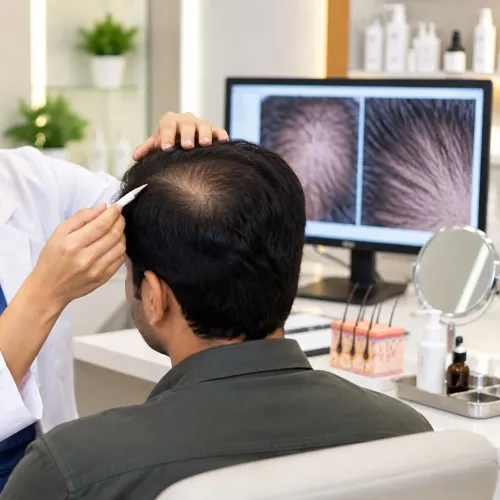
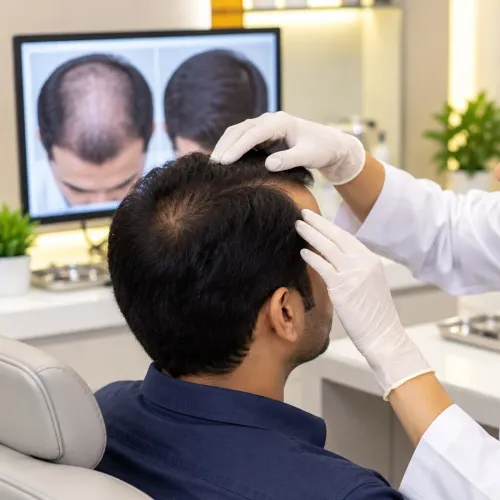
A consultation is essential before planning any hair restoration procedure.
The dermatologist or hair restoration specialist typically evaluates:
- Pattern of hair loss
- Donor hair quality
- Scalp condition
- Family history
- Medical history
- Lifestyle factors
Photographs and scalp analysis may also be used to create a personalised treatment plan.
The Recovery Process
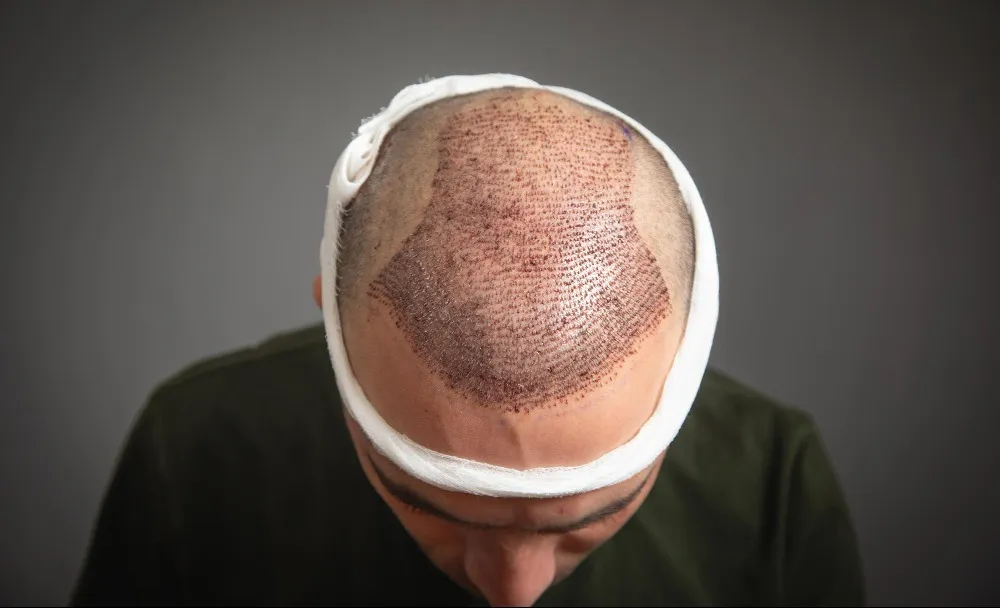
Recovery is usually straightforward when post-procedure instructions are followed carefully.
Most patients can expect:
- Mild redness
- Temporary swelling
- Small scabs around transplanted follicles
- Gradual healing over the following days
Newly transplanted hairs often shed within the first few weeks, which is a normal part of the growth cycle. Permanent hair growth develops gradually over several months.
Setting Realistic Expectations
Hair transplantation improves hair density, but it doesn't create unlimited hair.
Results depend on factors such as:
- Donor hair availability
- Hair texture
- Hair colour
- Extent of baldness
- Individual healing response
A skilled specialist focuses on creating a natural-looking hairline that suits your facial features.
Supporting Hair Health After Treatment
A transplant works best when supported by healthy habits.
These include:
- Following prescribed medications if advised
- Eating a balanced diet
- Avoiding smoking
- Managing stress
- Protecting the scalp from excessive sun exposure
- Attending scheduled follow-up visits
Long-term scalp care helps maintain overall hair health.
Why Professional Planning Matters
Hair transplantation is not simply about moving hair from one area to another. It requires careful planning, artistic judgement, and medical expertise to achieve natural results.
Experienced specialists consider:
- Future hair loss progression
- Hairline design
- Donor area preservation
- Hair growth direction
- Overall facial balance
A personalised approach often produces results that continue to look natural as you age.
For men in Chennai considering hair restoration, Finesse Aesthetic offers detailed assessments to determine whether a hair transplant is the right solution based on individual hair loss patterns and long-term goals. Careful planning, modern techniques, and realistic expectations together play an important role in achieving satisfying and natural-looking outcomes.
Keywords